

A polished commercial video can still miss the people it was made to reach. For Scottsdale brands, success starts before filming: strong commercial video production scottsdale campaigns connect a clear marketing goal to a local audience and the places viewers will encounter the video.
Choosing a format because it is trending or filming against a striking desert backdrop is not enough. The video needs to fit its purpose, whether that is introducing your brand, explaining an offer, or creating short-form content for social channels. This guide covers how to match a format to your audience and campaign, use Scottsdale’s local context with purpose, and prepare a practical production brief. It also explains why distribution belongs in the plan from day one. Video can work alongside paid advertising and a responsive website as part of a connected campaign. REVI combines commercial video production with ad buying, website development, and brand building to keep creative decisions aligned with your marketing strategy.
Key Takeaways
- Start with the action or understanding you want your audience to take away, then build the video around that campaign goal.
- Plan commercial video production scottsdale around your audience, core message, chosen format, and intended distribution channel.
- Compare commercial spots, brand storytelling, and social-first edits by what each needs to achieve, not by which format is trending.
- Include location, participants, schedule, and deliverables in pre-production so the shoot supports the finished campaign.
- Connect production with ad buying and website experiences from the start, so the video is shaped for where viewers will see it.
Why Scottsdale Businesses Use Commercial Video to Reach Local Audiences
Before choosing a camera angle or location, decide what you want viewers to understand or do. Should they recognize your brand, learn why an offer fits their needs, or take a specific next step? That decision gives the video a job and helps every creative choice support the campaign.
Commercial video production creates visual content designed to communicate a marketing message to a defined audience and support a specific campaign objective. Unlike a general brand film, which may focus broadly on identity and story, a commercial video starts with a more direct audience need and intended response. A video for prospective customers comparing services, for example, should answer a different first question than a social clip introducing a business to new viewers.
For Scottsdale brands, local relevance comes from understanding the people and context the campaign needs to reach, not simply adding desert scenery. Commercial video production Scottsdale projects can reflect a business’s character, its customers, and the ways people encounter its message across the city. REVI connects commercial production with brand building, ad buying, and website development, so campaign needs can inform creative choices from the start.
Match the video objective to the viewer’s next step
Choose an objective, then identify the viewer, their situation, and the first message they need. A clear brief might look like this:
- Awareness: Introduce the business to people who may not know it yet. A short social video can lead with a recognizable need or point of view.
- Consideration: Help someone weighing options understand why the business is relevant. A website video can explain an approach, service, or customer experience.
- Action: Make the next step clear for viewers who are already interested. A campaign landing page can pair a focused video with information that supports an inquiry or purchase decision.
These objectives are not interchangeable. Someone scrolling through posts needs a fast, clear opening; someone on a service page may be ready for more detail. Match the message and edit to that setting. The wider video production process, from pre-production through post-production, gives the team opportunities to keep audience needs in view.
Use Scottsdale context with a clear creative purpose
Old Town Scottsdale, the Scottsdale Airpark, a workplace, or a customer-facing space can each support a different story. Choose a setting because it reinforces the brand, audience relevance, or message, not simply because it looks local on camera. Ask what the location helps viewers understand that a neutral backdrop would not.
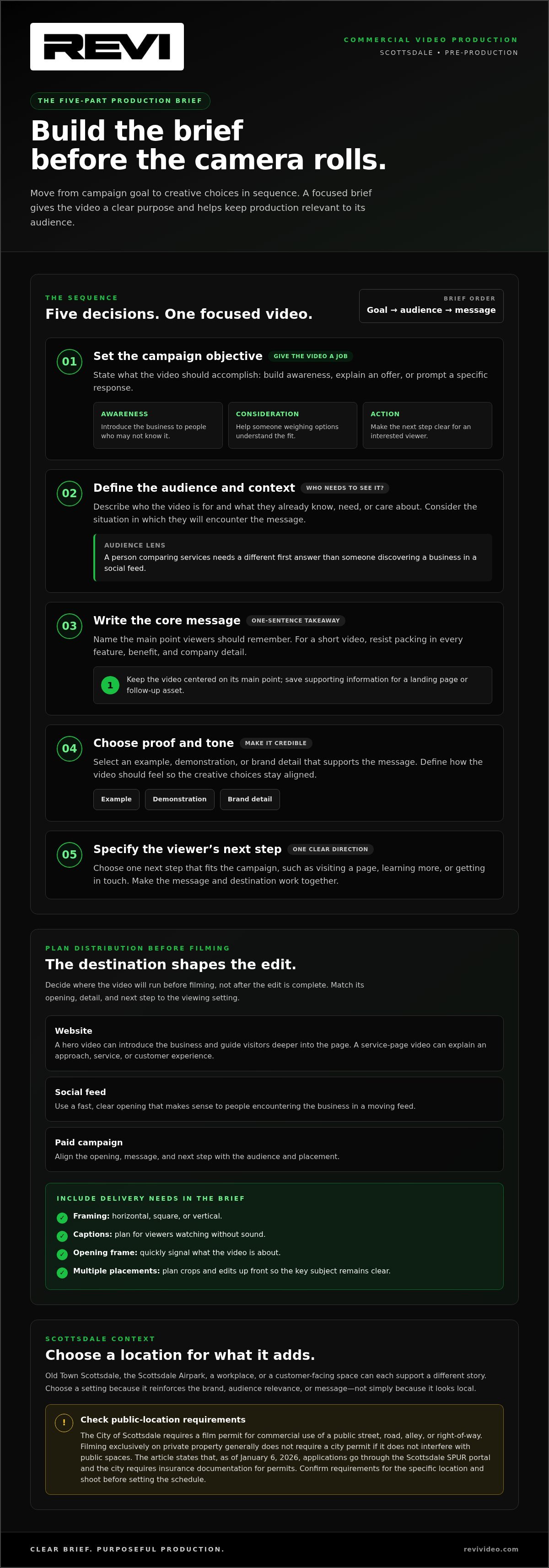
Build permissions into location planning. The City of Scottsdale requires a film permit for commercial use of a public street, road, alley, or right-of-way. Filming exclusively on private property generally does not require a city permit if it does not interfere with public spaces. As of January 6, 2026, permit applications go through the Scottsdale SPUR portal, and the city requires insurance documentation for permits. Confirm applicable requirements for the specific location and shoot before setting the schedule.
How to Shape a Scottsdale Commercial Video Strategy Before Filming
A focused production brief saves time on set and gives the finished video a clear purpose. Start with the business result, then work toward the creative choices. For commercial video production scottsdale, this sequence helps keep the concept relevant to local viewers and practical for the campaign.
Turn a business goal into a focused video brief
Translate the goal into a brief the creative team can use. Name the intended audience and what you want them to do after watching. Then identify the problem, question, or motivation that makes the message matter to them. A useful brief includes:
- Campaign objective: State whether the video should build awareness, explain an offer, or prompt a specific response.
- Audience and context: Describe who needs to see it and what they already know, need, or care about.
- Core message: Write the main takeaway in one sentence. For a short video, resist adding every feature, benefit, and company detail. Save supporting information for the landing page or a follow-up asset.
- Proof and tone: Choose an example, demonstration, or brand detail that makes the message credible, then define how the video should feel.
- Call to action: Specify one next step, such as visiting a page, learning more, or getting in touch.
One message does not mean a thin story. It means viewers can quickly understand what matters. Build the script around that point, and make each visual or supporting line earn its place.
Plan creative for the intended channels
The destination shapes the edit. A website hero video may introduce the business and guide visitors deeper into the page. A social placement needs to make sense in a fast-moving feed, while paid campaign creative should align its opening, message, and next step with the audience and placement. Decide where the video will run before filming, not after the edit is complete.
Include delivery needs in the brief: horizontal, square, or vertical framing; captions for viewers watching without sound; and an opening frame that quickly signals what the video is about. If you need versions for several placements, plan those crops and edits up front so the key subject and message remain visible in each format.
For a wider view of regional considerations, REVI’s Phoenix commercial video production guide adds metro-area context. REVI can shape the brief and production plan together through commercial video production built around the intended audience, campaign message, and distribution needs.
Commercial Video Formats and Production Choices for Scottsdale Brands
A polished video can still miss its mark. Strong visuals will not fix a message that does not fit the audience, placement, or campaign goal. For commercial video production scottsdale, start with the job the video needs to do, then choose a format and production scope to match. No single format works best for every brand or campaign.
Choose a format that serves the campaign
A concise commercial spot can bring one offer, product, or message into focus. Brand storytelling takes a broader approach, showing the people, values, or customer experience behind a business. Social-first edits prioritize immediate clarity and platform-friendly pacing, often adapting the framing and opening for vertical or square viewing. Match the format to the audience’s needs and where they will encounter it.
| Format | Useful for | Possible placement | Creative strength |
|---|---|---|---|
| Commercial spot | Promoting a focused offer or message | Paid campaigns, landing pages | Direct, memorable communication |
| Brand storytelling | Making a business’s people, values, or experience more visible | Website, brand channels | Builds context and connection |
| Social-first edit | Reaching viewers in a fast-scrolling feed | Social platforms, paid social | Adapts pacing and framing to the placement |
Use the comparison as a starting point, not a formula. A short commercial can still feel human, and a brand story can support a specific campaign. The deciding factor is whether the creative gives the intended viewer a clear reason to keep watching and a useful next step.
Build useful deliverables into the production plan
Define placements and versions before filming. A website video may need a horizontal master, while social placements could call for vertical crops, captions, or shorter cutdowns. Plan the framing and footage around those needs rather than relying on a single edit to be reshaped later without losing important details.
- Scope: Set expectations for locations, participants, filming time, and the message each scene supports.
- Editing: Identify the main version, cutdowns, captions, and aspect ratios the campaign needs.
- Supporting assets: Consider still frames or other campaign materials if they serve the planned placements.
- Distribution: Coordinate creative with paid media and the website experience so the video and destination work together.
These choices shape the production scope, from talent and locations to filming and post-production. REVI provides end-to-end video production tailored to the brief and its required deliverables. Well-planned assets give a campaign useful tools, but they do not guarantee reach or results. Audience fit, placement, and distribution still matter.
Plan a Commercial Video Shoot Around Scottsdale Locations and Logistics
A strong shoot plan makes the creative practical. Before setting a date, map locations, people, access needs, and finished assets against the brief. For commercial video production scottsdale, this step can help prevent a compelling concept from running into avoidable scheduling or location issues.
Select a location that supports the story
Choose a setting for what it adds to the message. An indoor space may give an interview a controlled, consistent look; an outdoor scene can bring the surrounding environment into the story. A workplace or customer-facing area can show how a business operates if that experience is relevant to the audience. Old Town Scottsdale or the Scottsdale Airpark may suit some campaigns, but a recognizable location alone does not make a video more persuasive.
Check access and permissions before setting the schedule. The City of Scottsdale requires a film permit for commercial use of a public street, road, alley, or right-of-way. Filming exclusively on private property does not require a city permit if it does not interfere with public spaces. Since January 6, 2026, permit applications have gone through the Scottsdale SPUR online portal. Some city-owned sites, including Scottsdale Airport and WestWorld, have their own processes, so verify requirements with the relevant location. Also account for weather, changing outdoor conditions, parking or load-in access, and the impact of filming on business operations.
Prepare people, schedule, and production needs
Share the schedule with everyone involved and name a day-of contact who can resolve access or timing questions. Build the plan around participant availability, customer activity, sound conditions, and the location’s operating needs. A quieter interview setup may require a different time or room than customer-facing footage. Leave room for setup and transitions rather than scheduling only the scenes themselves.
Use this pre-production checklist to keep the shoot tied to its purpose:
- Location: Confirm access, permission requirements, usable spaces, and restrictions that affect filming.
- Participants: Identify interviewees, on-camera roles, decision-makers, and the person coordinating on the day.
- Schedule: Align filming with business operations, participant availability, sound conditions, and outdoor conditions.
- Scenes and assets: List required shots, brand materials, products or details to feature, and approval steps.
- Deliverables: Recheck planned placements and formats so production captures footage suited to the intended edits.
For broader context on working with a local production partner, REVI’s local video production partner guide explores considerations for Phoenix-area brands. Plan your Scottsdale commercial video with REVI around your audience, locations, and campaign deliverables.
Connect REVI Commercial Video Production With Campaign Distribution
A finished video is a creative asset. Distribution gives it a route to the intended audience, while the page or platform around it shapes what viewers can do next. REVI combines commercial video production with ad buying and website development, so campaign decisions can inform the creative before filming, not just the media plan after editing.
Prepare video for paid and owned channels
Ad buying can place campaign creative in front of a defined audience. That plan affects production: who appears in the opening, which message leads, and what version suits the placement. A video for a paid social campaign may need a fast opening and a clear call to action; one on a service page can work alongside more detailed copy.
Make the destination continue the video’s promise. If the creative introduces a specific service or offer, send viewers to a relevant landing page with matching information and a clear next step. Align the headline, visuals, and action so the transition feels natural rather than like a new campaign. For additional considerations when assessing production partners, explore this Phoenix video production agency selection guide.
Before the shoot, map each planned asset to its channel and destination. This lets production account for framing, message, and calls to action across the campaign, while ad buying and web development support how viewers encounter the video and continue from it.
Define success before launching the campaign
Choose measurement questions that fit the objective. If the goal is attention, review audience retention and where viewers stop watching. If the goal is site traffic, examine click-throughs and whether visits reach the intended page. If the campaign aims to generate inquiries, look at relevant on-page actions, such as form submissions or clicks on calls to action.
Read those signals in context. Creative quality matters, but campaign outcomes can also reflect audience targeting, placement, the offer, and the experience after the click. Retention may point to an effective opening or a section that needs a tighter edit. Click-throughs alongside on-page actions can help show whether the landing experience carries the message forward. Use the measures as learning tools, not as a promise that a particular video will deliver a particular result.
For commercial video production Scottsdale brands can connect to paid media and responsive web experiences, REVI aligns production planning with campaign distribution from the outset. Bring your Scottsdale-area project and campaign goal to REVI to plan the video and the path viewers take after watching.
Turn Your Next Video Idea Into a Campaign
Your next video can do more than fill a content calendar. Treat it as the start of a campaign that gives viewers a clear reason to pay attention and a useful next step. Begin with one question: what should the audience understand or do after watching?
The answer can guide the creative, the destination, and how you introduce the video to potential customers. REVI brings commercial video production for commercials, social media, and brand storytelling together with ad buying and website development. These services support one another, helping your campaign stay connected from the first frame to the landing page.
For Scottsdale brands, commercial video production scottsdale can be a focused investment in how your business shows up and speaks to its audience. Choose a goal, shape a message around it, and build a video experience that feels intentional wherever people encounter it.
Start planning your Scottsdale video campaign with REVI and turn your next idea into a clear, audience-focused project. Your story can go further when every creative choice has a purpose.
Frequently Asked Questions
What does commercial video production include?
Commercial video production can include creative development, scripting, pre-production, filming, editing, and preparing finished assets for their intended use. The scope depends on the brief. A campaign, for example, may need product demonstrations, interview footage, graphics, captions, or alternate edits. Agree on the required deliverables and approval process before production so the team can plan the shoot and post-production around what the campaign needs.
How much does commercial video production cost in Scottsdale?
The cost of commercial video production in Scottsdale depends on the project scope, including crew and equipment needs, filming time, locations, talent, and editing complexity. A focused shoot with a simple edit has different requirements from a multi-location campaign with several versions. To define a useful scope, prioritize the video’s main objective and essential deliverables, then separate must-have production elements from optional creative additions.
How long does it take to produce a commercial video?
Production timing varies with the concept, number of locations and participants, filming schedule, editing needs, and how quickly stakeholders provide approvals. A project involving multiple decision-makers may need more review time than a straightforward shoot. Build the schedule backward from the campaign launch date, allowing time for planning, filming, edits, and feedback. Decide who approves the script and final cut so decisions do not stall the process.
Can one commercial video work across social media and a website?
One central concept can support both, but a single exported file may not suit every placement. A website player and a vertical social feed have different screen shapes and viewing contexts. Plan a clean master edit plus any crops, captions, or shorter versions the campaign needs. Keep key text and subjects within the safe viewing area, and preview each version on its intended device before publishing.
Do I need a filming permit for a commercial video in Scottsdale?
Scottsdale requires a film permit for commercial use of a public street, road, alley, or right-of-way. Filming exclusively on private property generally does not require a city permit if it does not interfere with public spaces. Applications go through the Scottsdale SPUR portal. Permit applicants need insurance documentation, and some city-owned locations have separate processes. Check the City of Scottsdale’s current requirements for your exact location and setup during planning.
How do I measure whether a commercial video is working?
Measure the video against the campaign objective. For awareness, review reach and how long viewers watch; for consideration, examine visits to relevant pages; for action, track inquiries or completed forms. Use campaign links with tracking parameters where appropriate, and compare results against the same objective and audience over time. A view alone does not show whether the video moved someone toward a business goal, so connect engagement data to meaningful next steps.
Should I hire a local Scottsdale video production company?
A local partner can be useful when filming, participants, and campaign needs are rooted in the area. REVI serves Scottsdale and nearby Phoenix-area communities, including Phoenix, Gilbert, Mesa, Chandler, Paradise Valley, and Tempe. This local coverage can keep creative planning connected to the project’s setting and audience. Consider how production will fit alongside distribution and web needs, especially if the video supports a broader regional campaign.