

What if a fast website didn’t just load quickly, but made it easier for the right customers to take action? If you’re looking for a fast loading website developer Mesa businesses can turn to for more than a quick technical fix, the key is how the entire site is planned. A slow or unresponsive experience can frustrate visitors, while polished visuals alone won’t guide them toward a call, booking, or purchase.
Speed is about more than a stopwatch. It includes how quickly a page’s main content appears, how smoothly it responds to taps and clicks, and whether the layout stays stable as it loads. These measures make performance easier to assess, but they matter most when considered alongside the tasks visitors need to complete.
This article explains how website speed supports user confidence and conversion, which performance and responsive design factors matter, and how to assess a site beyond a single speed score. You’ll also see how REVI brings custom UX, brand integration, and scalable architecture together to build high-performance, conversion-focused websites for Mesa businesses. The goal is a smoother path from first visit to meaningful action.
Key Takeaways
- Use Core Web Vitals to assess loading, responsiveness, and visual stability, then check how important pages work across devices.
- Evaluate design, mobile usability, conversion paths, and scalability together. Strong visuals and smooth performance should work as one.
- Before a redesign, map business goals, key pages, visitor tasks, and points of friction to clarify what the new site needs to do.
- A fast loading website developer mesa businesses work with should connect performance planning to the site’s audience and conversion goals.
- REVI combines custom UX, responsive design, brand integration, and scalable architecture to build high-performance websites around business needs.
Why Fast-Loading Websites Matter for Mesa Businesses
A website can look polished and still make visitors wait, struggle to tap a menu, or lose their place when the layout shifts. For a Mesa business, these interruptions can prevent a potential customer from finding a service or getting in touch. A fast-loading website developer mesa businesses choose should look beyond a single score and build an experience that helps visitors move forward.
Website loading speed measures how quickly content appears; user-perceived performance reflects how quickly and smoothly the whole site feels to use. Both matter. Technical measurements can reveal performance issues, while clear visual design helps visitors understand the business and find relevant information. A strong website needs both working together to support its goals.
What does website speed mean to a visitor?
Visitors experience speed in a sequence of moments. First, they look for meaningful content, such as a service headline or contact information. Then they expect buttons, menus, and forms to respond when tapped. They also need the page to stay stable as more content loads. A page may begin loading quickly yet still feel frustrating if its key information appears late or its controls respond slowly.
Consider someone in Mesa searching on a phone for a local service. They open a business website, scan the first screen, and look for the service area or a way to request information. If images push the text down, the menu stalls, or a button shifts just as they tap it, the visitor has to work harder. That friction can make leaving easier than continuing.
Web performance optimization covers techniques for improving how quickly and reliably a website loads. A useful assessment should also consider what visitors are trying to do and whether the site makes those actions straightforward. For example, test whether a visitor can move from a service page to a contact form without waiting for controls or searching for the next step.
Why should Mesa businesses care about site performance?
Performance shapes the path from discovery to action. When visitors can find a service, understand what the business offers, and reach a contact or purchase step without unnecessary delay, the journey feels more direct. This doesn’t guarantee a conversion, but it can remove obstacles that might otherwise interrupt a visitor’s momentum.
Mobile usability is part of that experience. A responsive layout adapts content and controls to smaller screens, helping visitors read, navigate, and take action without excessive zooming or sideways scrolling. For a Mesa business serving customers across the East Valley, a clear mobile experience helps people find information wherever they’re browsing.
That’s why speed shouldn’t be treated as a last-minute technical tweak or a substitute for visual quality. It belongs in the planning, alongside brand presentation, useful content, and the actions each page should support. A fast loading website developer mesa businesses partner with can align performance with custom UX and conversion goals, so the site feels polished and works smoothly.
How Fast Website Performance Works: Metrics, UX, and Architecture
A performance score is useful, but it doesn’t tell the whole story. A page can load its main content quickly and still feel sluggish if buttons hesitate or the layout jumps during browsing. Strong performance connects technical delivery with what people can see and do.
Website speed depends on both how efficiently the site delivers its content and how smoothly the page works for the visitor. Core Web Vitals help measure key parts of that experience: loading, responsiveness, and visual stability. They offer a shared framework for spotting issues, but they don’t replace checking how important pages work on real devices.
Which website performance metrics are useful?
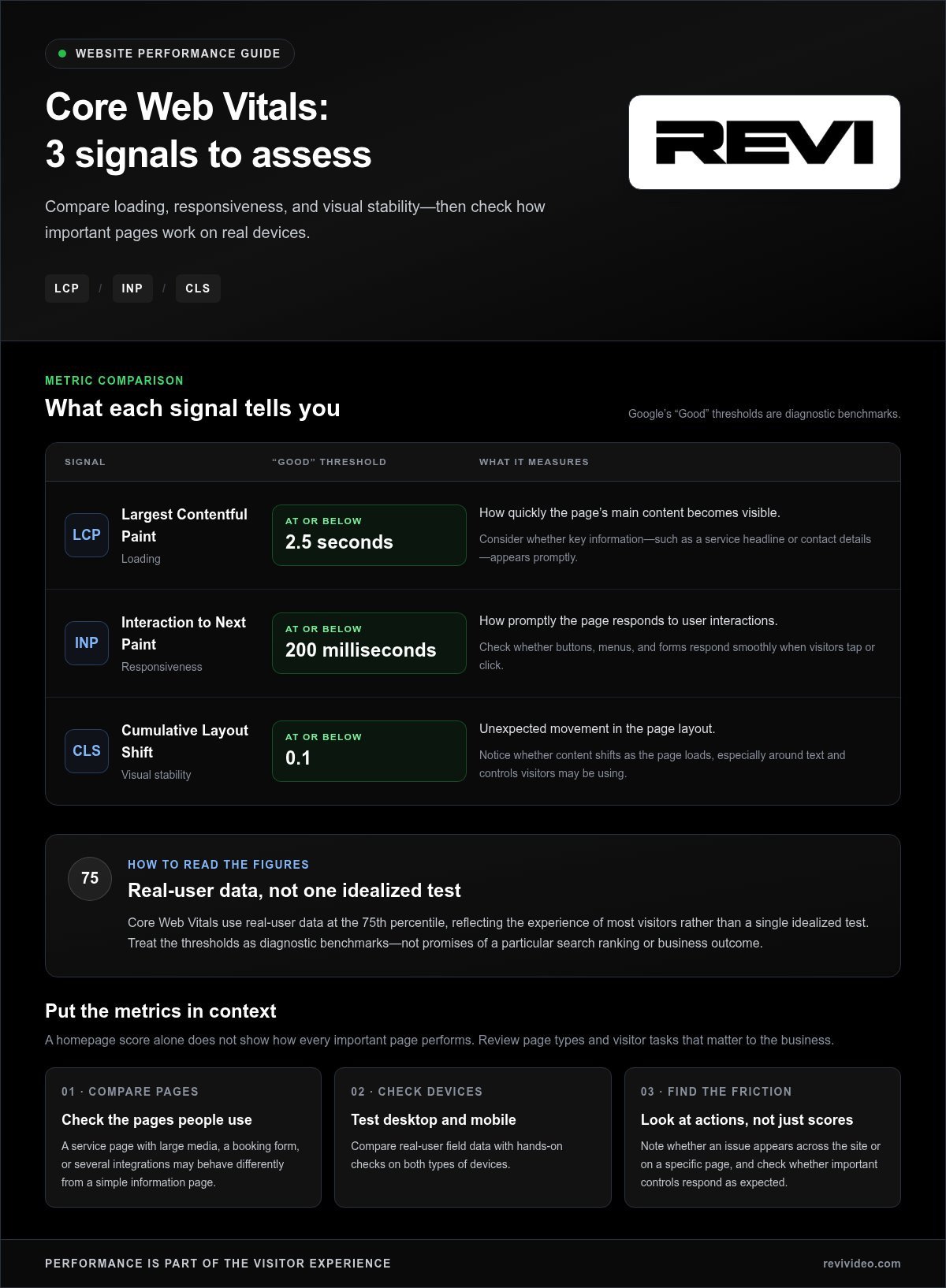
Google’s Core Web Vitals focus on three signals. Largest Contentful Paint (LCP) measures how quickly the main content becomes visible. Interaction to Next Paint (INP) assesses how promptly the page responds to user interactions. Cumulative Layout Shift (CLS) measures unexpected movement in the page layout.
Google’s “Good” thresholds are LCP at or below 2.5 seconds, INP at or below 200 milliseconds, and CLS at or below 0.1. These measures use real-user data at the 75th percentile, so they reflect the experience of most visitors rather than a single idealized test. Treat the figures as diagnostic benchmarks, not promises of a particular search ranking or business outcome.
Look beyond a single homepage result. A service page with large media, a booking form, or several integrations may behave differently from a simple information page. Review the page types and actions that matter to your business. Compare field data with hands-on checks on desktop and mobile, and note whether the issue appears across the site or on a specific page.
How do custom UX and architecture affect speed?
Every design and functionality choice shapes the experience. A page crowded with oversized media, unnecessary effects, or integrations can take longer to display and respond. A clear structure helps visitors find relevant information, while purposeful content and carefully planned system integrations keep the experience focused on the tasks each page should support.
Responsive design adapts the layout to different screen sizes. It should preserve legibility, keep controls easy to use, and make key content accessible without awkward zooming or scrolling. That’s more than shrinking a desktop page. The hierarchy and interactions need to make sense on each device.
Architecture matters as the business evolves. A site should support its current pages and systems while allowing for planned additions, such as new services or advanced integrations, without making the experience needlessly complex. A fast loading website developer mesa businesses partner with should connect those choices to custom UX, brand priorities, and conversion goals, rather than treat speed as an isolated tweak.
REVI builds high-performance websites with custom UX, responsive design, and scalable architecture. Explore REVI’s website development approach to see how performance can fit into a strategic, conversion-focused web project.
Fast Website vs. Attractive Website: What Mesa Businesses Should Evaluate
A website shouldn’t force a choice between visual impact and smooth performance. Mesa businesses need a digital experience that expresses their brand, loads efficiently, works across devices, and makes the next step clear. Evaluate those qualities together. A striking page that obscures key information can frustrate visitors, while a fast page without a distinct identity may not communicate why the business is right for them.
| What to evaluate | Design-only focus | Balanced project goal |
|---|---|---|
| Visual design | Distinctive appearance | Brand expression with clear hierarchy and readable content |
| Loading experience | How the page looks when complete | Useful content appears promptly and the page feels smooth |
| Mobile usability | A desktop layout scaled down | Legible content and practical controls on smaller screens |
| Conversion path | Prominent visual elements | A clear route from the visitor’s need to a relevant action |
| Scalability | Current pages and presentation | A flexible structure that supports evolving business needs |
Can a visually polished website also load quickly?
Yes. Thoughtful structure lets brand elements stand out without competing with navigation or essential information. A bold visual identity can work alongside concise content, clear page sections, and a focused next step. The goal isn’t to strip away personality. It’s to make every element earn its place in the experience.
Assess content and integrations in context. Ask what a visitor needs from a page, what each feature contributes, and whether it supports that purpose. For instance, check whether an embedded feature is essential to a visitor’s task or whether a simpler route would make the page easier to use. This keeps design decisions tied to the audience and project goals.
How should conversion goals shape a speed decision?
Start with the visitor’s journey: a person lands on a relevant page, understands the offer, finds a useful detail, and takes an appropriate action. Custom UX can make that path easier to follow by organizing information around visitor needs and giving important actions clear placement. It can reduce unnecessary friction, but no layout can promise a particular conversion outcome.
Use this framework to assess a proposed design:
- Brand: Does the visual language feel consistent and recognizable?
- Clarity: Can visitors quickly understand the page and find the information they came for?
- Action: Is the next step relevant, visible, and easy to use?
- Growth: Can the structure support new content or business needs as they emerge?
A fast loading website developer mesa businesses choose should align responsive design, branding integration, and custom architecture with the site’s purpose. REVI brings those elements together in high-performance, conversion-focused website development. Explore REVI’s website development approach to see how design and performance can support the same business goals.
A Practical Website Speed Planning Checklist for Mesa Projects
A focused website brief makes speed decisions more useful. Start with what the site needs to accomplish, then connect each page, feature, and performance priority to that purpose. Before a redesign or new build, document where visitors struggle today and what you want them to do next. That gives the project a practical foundation rather than relying on assumptions.
- Identify business goals. Clarify what the website should support, such as service inquiries, appointments, or purchases. Note the audiences you need to reach and the information they need to make a decision.
- Map key pages and journeys. List essential pages, then trace common paths from an entry point to a relevant action. For example, a visitor may land on a service page, review what’s included, and look for a way to get in touch.
- Prioritize user tasks. Decide which actions matter most on each page. Make those tasks easy to find and complete, and record points of friction on the current site, such as unclear navigation or a hard-to-use form.
- Define performance and growth needs. Set expectations for responsive behavior, readable content, brand expression, and smooth interactions across screen sizes. List required integrations and the purpose each one serves, then consider how the site may need to adapt as the business grows.
What should a Mesa business include in its website brief?
Bring the project essentials into one document: target audiences, important page journeys, brand needs, and primary conversion actions. Describe the content and features visitors need to complete those actions. For each integration, state its business purpose and where it fits into the journey. Then prioritize responsive UX, performance, and scalability so design and architecture decisions serve current needs and future plans.
How can a business assess an existing slow website?
Start by noting which pages feel difficult to use and where friction occurs: a page that seems slow to display, a control that responds late, or a form that’s confusing on mobile. Compare performance measures with real journeys and the purpose of each page. Keep observations separate from theories about the cause. A low score points to an area to investigate; it doesn’t, on its own, explain the underlying issue.
Turn the findings into a brief: name the page, describe the observed problem, explain the visitor’s task, and state the intended improvement. This gives a fast loading website developer mesa project a practical starting point, connecting performance work to user needs and business goals.
REVI brings custom UX, responsive design, branding integration, and scalable architecture into high-performance, conversion-focused website development. Explore REVI’s high-performance Web approach to plan a site around speed, visitor journeys, and growth.
REVI’s Fast-Loading Website Development for Mesa Businesses
A high-performance website takes more than a speed adjustment. REVI’s Web service brings custom UX, responsive design, scalable architecture, branding integration, and advanced system integrations into one strategic development approach. Each part supports the others: design helps visitors understand the business, the experience guides them through useful information, and the architecture supports the site’s goals as needs evolve.
That integrated thinking matters for businesses in Mesa and nearby communities, including Phoenix, Scottsdale, Gilbert, Chandler, Paradise Valley, and Tempe. A prospective customer might arrive looking for a specific service, while another wants to understand the business before reaching out. Custom page structure can serve both journeys while keeping the experience consistent with the brand.
What does REVI bring to a custom website project?
REVI shapes UX around the purpose of the site and the actions visitors need to take. Responsive design helps that experience adapt across screen sizes, so content and interactions remain usable on mobile and desktop. Branding integration carries the business’s visual identity into the website, helping its digital presence feel cohesive with its marketing.
Scalable architecture and advanced system integrations connect the site’s structure to project requirements. A business can plan around its current content and workflows while considering how the website may need to support future growth. The structure is shaped by the project’s goals, pages, and systems. The principle stays clear: build with purpose and avoid unnecessary complexity.
For businesses refining their brand presence, the Phoenix branding agency guide offers related context on brand identity. A clear identity gives website design a stronger foundation, from visual choices to the way the business communicates its value.
How does REVI connect website development with growth strategy?
Conversion-focused planning gives each page a business purpose. A service page might clarify the offer and direct visitors toward an inquiry. An informational page might answer a key question and help people decide what to explore next. By aligning content, navigation, and calls to action with visitor needs, the website can create a more intentional path without promising a particular result.
REVI also brings a data-backed mindset to creative strategy and advertising. That perspective can help shape decisions about what the site communicates and which audience actions it should support. Performance belongs in that planning too, not as a final technical patch, but as part of custom architecture designed around usability, brand, and business priorities.
If you’re searching for a fast loading website developer mesa businesses can partner with for strategic, conversion-focused development, REVI brings these elements together in its Web service. Build a high-performance website with REVI.
Turn Your Website Plan Into a Stronger Next Step
Your next website project can start with one clear question: what should visitors be able to do more easily? Use the answer to guide decisions about content, structure, and the experience you want your business to deliver. That focus keeps performance tied to a real purpose, rather than treating speed as a score to chase on its own.
If you’re looking for a fast loading website developer mesa businesses can work with on a strategic web project, REVI brings website development together with data-backed creative and marketing expertise. A focused plan can give your brand a purposeful digital foundation and room to evolve as your business grows.
Build a high-performance website with REVI and take the next step toward a digital experience designed around your goals.
Frequently Asked Questions
What makes a website fast-loading?
A fast-loading website lets visitors access useful content and use page controls without unnecessary waiting or disruptive layout changes. Test it through a real task: open a service page, find a key detail, and try its contact form. Repeat the check on different page types and devices. A homepage may feel smooth while a form or media-heavy page creates delays, so assess the journeys that matter to your business.
How can I check whether my website is loading slowly?
Use Google PageSpeed Insights to review a page’s performance data, then test the experience yourself on a phone and desktop. Check more than the homepage: include a service page, a form, and any page with important customer actions. Note what you observe, such as a delayed headline or an unresponsive button, and separate those observations from guesses about the cause. Retest key pages after changes.
Do fast-loading websites rank higher on Google?
Fast performance can support a better page experience, but it doesn’t guarantee higher Google rankings. Search visibility depends on many factors, including how well a page serves the searcher’s intent and the quality of its content. Treat speed as one part of a broader SEO and user-experience plan. A useful next step is to assess performance alongside whether each page answers a clear customer question.
Can a custom website be both fast and visually distinctive?
Yes. A custom site can express a distinctive identity while keeping its pages easy to scan and use. For example, a business can apply its visual style consistently across service descriptions and calls to action while keeping essential information prominent. Evaluate each design element by what it contributes to recognition, understanding, or a useful next step. Good design choices serve both the brand and the visitor.
How much does it cost to hire a website developer in Mesa?
Website development costs depend on the project’s scope, so there isn’t one useful price for every Mesa business. The number and type of pages, custom functionality, content needs, and integrations can all shape the work involved. To prepare for a project, document the pages and features you need, the systems the site must connect with, and the business priorities it should support. REVI develops high-performance, conversion-focused websites around those requirements.
Does website speed matter on mobile devices?
Yes. Mobile visitors need pages that are quick to access and practical to use on a smaller screen. Try completing an important task: can you read the page, open navigation, and tap the intended action without zooming or struggling with crowded controls? Check forms and menus as well as content. A smooth mobile journey makes it easier for visitors to stay focused on what they came to do.
Can REVI build a conversion-focused website for a Mesa business?
Yes. REVI develops conversion-focused websites that connect page decisions to business goals, such as helping a visitor understand an offer and take a relevant next step. A fast loading website developer mesa businesses choose should consider the full journey, not speed in isolation. REVI serves businesses in Mesa, Phoenix, Scottsdale, Gilbert, Chandler, Paradise Valley, and Tempe, bringing website development together with strategic, data-backed creative and marketing capabilities.