

A dispensary stands out when its brand makes its specialty clear and gives customers a consistent, reassuring experience. Effective branding for cannabis dispensaries in Arizona connects a distinct identity with products and service that feel easy to understand and recognize. Arizona allows recreational cannabis sales to adults aged 21 and older, according to the Arizona Department of Health Services.
In a crowded market, a polished logo alone won’t build lasting trust. Customers also notice what a dispensary specializes in, how clearly it communicates, and whether the experience feels consistent from first impression to visit.
This article explores how specialization, Arizona’s adult-use context, brand identity, and customer experience shape consumer trust and appeal. You’ll learn how to clarify a dispensary’s positioning, build recognition over time, and create an experience customers have a reason to remember.
Key Takeaways
- Clarify what your dispensary specializes in so customers can quickly understand what makes its offering relevant to them.
- Build an identity that carries consistently across your visuals, messaging, website, and in-store experience.
- Find practical ways to make each customer interaction clear, welcoming, and memorable.
- Strengthen recognition over time through consistency and a customer experience that supports trust.
- Review branding and advertising decisions with Arizona’s regulatory context in mind, and keep promotional messaging responsible.
1. Specialization and consumer trust
Arizona’s adult-use market gives dispensaries a clear audience to serve. Recreational cannabis sales are allowed for adults aged 21 and older, according to the Arizona Department of Health Services. A brand can help these customers make sense of their options by stating its focus clearly. Start with the products, values, or shopping experience that define the business, then make that focus visible in its messaging.
Specificity helps customers decide whether a dispensary fits their interests. A store known for a broad selection communicates something different from one that highlights flower, vape products, or concentrates. These examples describe possible positioning, not a ranking of products. Use category names consistently so customers can quickly recognize what the business emphasizes across its website, menus, and other brand materials.
Product category alone may not convey a brand’s point of view. Customers may also consider cultivation philosophies and production techniques when evaluating cannabis brands. Make these details easier to understand by explaining the distinctions the business considers meaningful in plain language, not insider shorthand. For example, a product description can identify its category and explain the production detail the brand wants customers to notice.
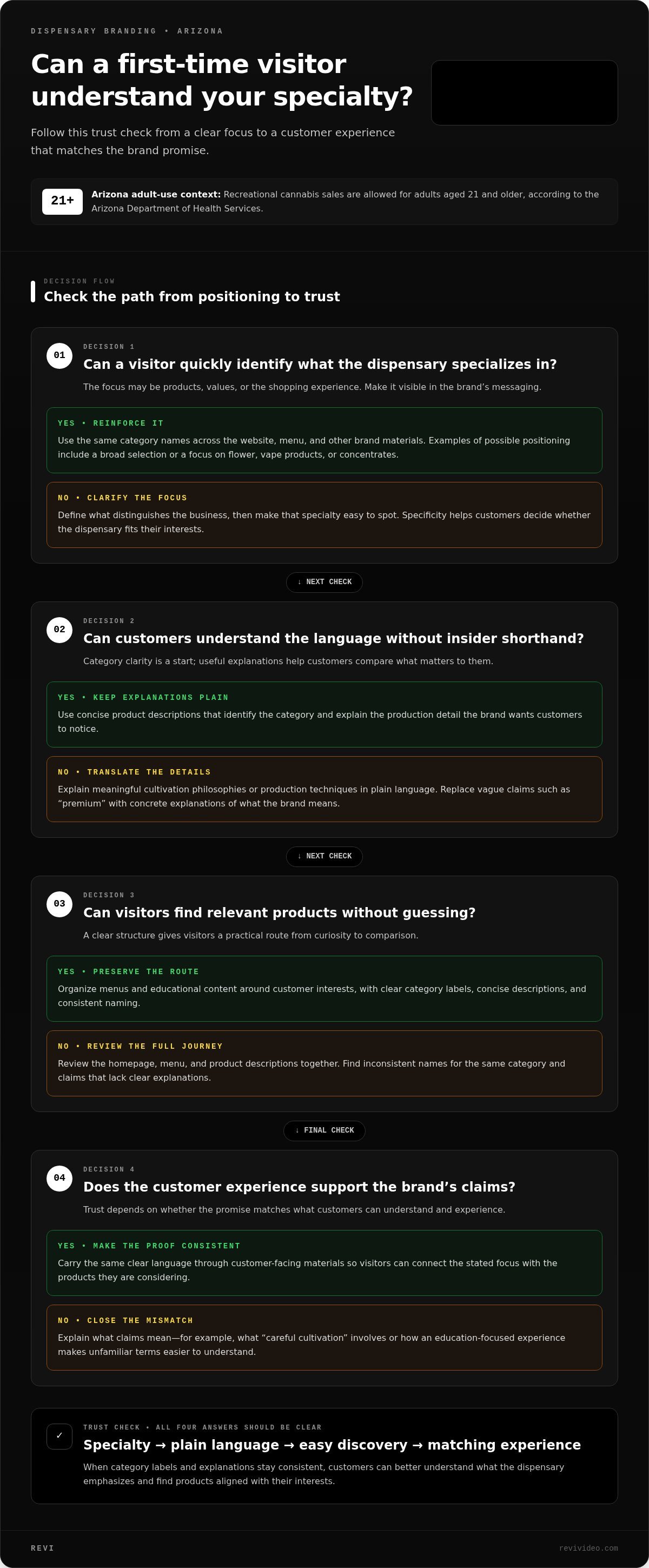
Make the specialization useful, not just memorable. Someone exploring flower may want different information from someone comparing vape products. Organize menus and educational content around those interests, with clear category labels, concise descriptions, and consistent naming. This structure gives visitors a practical route from curiosity to comparison while reinforcing what the dispensary wants to be known for.
Trust also depends on how well the brand’s claims match the experience. If a dispensary emphasizes careful cultivation, explain what that means rather than relying on vague words like “premium.” If it focuses on approachable education, define unfamiliar terms. Concrete explanations give customers something they can evaluate and help prevent a mismatch between the brand’s promise and presentation.
Use a simple test: can a first-time visitor identify the dispensary’s specialty, understand the language, and find relevant products without guessing? Review the homepage, menu, and product descriptions together. Look for inconsistent names for the same category or claims without explanation. In branding for cannabis dispensaries in Arizona, a defined specialty can guide decisions and recognition, while clear, consistent details give customers a stronger basis for trust.
Look for inconsistent names for the same category or claims without clear explanations. When category labels appear consistently, visitors can connect the brand’s stated focus with the products they’re considering. A clear product-category specialization can help cannabis consumers find options that match their interests and guide purchasing decisions.
Category clarity gives shoppers a practical starting point as they narrow their options. Keep the specialization easy to spot and use familiar category terms throughout customer-facing materials. If the business changes how it describes its focus, review those materials together so the category remains recognizable. Consistent wording helps customers understand what the company emphasizes and find products aligned with their interests.
3. Arizona dispensary brand identities and customer experience
In Arizona, a memorable dispensary identity needs to work beyond the logo. Dispensaries operate under the Arizona Department of Health Services and are subject to licensing, safety, and product-quality regulations. Build the customer experience around clear navigation, consistent language, and design that makes the business recognizable without obscuring useful product information.
Can Arizona dispensaries use cannabis leaf imagery, product claims, or lifestyle advertising? Don’t assume any of these are automatically permitted. Review each creative asset against applicable Arizona requirements and the advertising platform’s current policies. Keep claims accurate, use adult-focused visuals, and avoid language that could mislead customers.
What are Arizona’s cannabis packaging and labeling requirements for dispensaries? Dispensaries must operate within the state’s licensing, safety, and product-quality rules. Treat packaging and labels as functional information first: preserve required product and safety details, keep copy readable, and make brand graphics support rather than compete with that information.
How do Arizona dispensaries build a distinctive brand while complying with state law? Establish a recognizable visual system, then apply it consistently to the website, menu, packaging, and in-store signs. Before publishing, review the entire customer-facing piece, including its claims, imagery, and product details, rather than approving the logo in isolation.
What should an Arizona dispensary consider when choosing a name, logo, and brand identity? Choose a name customers can distinguish and remember, and a logo that stays legible on a menu or small package. Check that the identity fits the dispensary’s positioning, works across digital and physical formats, and doesn’t depend on unsupported product claims.
How can Arizona cannabis brands market online and on social media within platform and state rules? Match each post to the platform’s current cannabis advertising policies, then review its audience, imagery, wording, and destination page before publishing. A polished Instagram post can still create a poor experience if the linked menu uses inconsistent names or confusing descriptions.
What branding strategies work for dispensaries in Phoenix, Mesa, and other local markets? Build from the actual store experience in each location, not city stereotypes. Use customer questions, local service details, and the online menu’s layout to shape useful messaging, then keep core brand elements consistent across locations.
What are the risks and penalties for noncompliant cannabis advertising in Arizona? A campaign that conflicts with applicable rules or platform policies may face review, removal, or required changes. Keep a record of approved creative and review updated assets before launch, especially when changing claims, images, or social placements.
Turn these checks into a repeatable brand review: compare the name, logo, product information, and customer journey across every touchpoint. A focused brand-building process can help align those elements into one clear, recognizable identity.
4. Brand recognition and consumer appeal
Recognition grows when customers encounter the same clear identity repeatedly. For an Arizona dispensary like REVI, that means aligning the store sign, website, menu, packaging, and staff language. Customers who see one visual style online should recognize it again at the storefront. Consistency makes the brand easier to identify and creates a coherent impression rather than a collection of disconnected marketing pieces.
Start with a small set of repeatable design choices. Use the same logo, type styles, color palette, and tone across a Phoenix store’s menu and digital content. Test whether the logo remains readable on a phone screen and a printed menu. If it only works at full size, simplify it. Clear recognition depends on details that hold up across formats.
Visual consistency earns attention; product quality and a dependable experience support trust. Make the menu easy to scan, use consistent product names across channels, and ensure staff explanations match the information customers see online. If the menu groups products by category, for example, use those same labels on in-store signage. Matching details reduce friction and strengthen familiarity.
Review the customer journey in practice. Open the website as a first-time visitor, locate the menu, compare a product description with its in-store presentation, and note confusing language. Then inspect social posts and printed materials for mismatched logos or descriptions. Fix the clearest disconnects first. A short, repeatable review helps protect recognition as new creative assets appear.
Local relevance can add character without splitting the brand. A Phoenix location might feature recognizable neighborhood details in its content, while regional touchpoints highlight a broader community context across Arizona. Keep the core logo, visual system, and brand promise consistent in all places. Change supporting examples or local messages, not the identity customers use to recognize the business.
Consumer appeal also depends on clarity. Explain unfamiliar terms, organize product information predictably, and make the next step easy to find. Someone comparing flower and vape products, for instance, should be able to move between categories without relearning the menu. Clear structure serves new visitors and returning customers looking for a familiar item.
Use customer feedback to guide updates. Track recurring questions, note where visitors hesitate, and identify confusing menu labels. If customers repeatedly ask what a description means, rewrite it in plain language. Keep changes focused, then review the website, menu, and store experience again. This steady process turns consistency into stronger recognition and consumer appeal.
4. What are Arizona’s rules for cannabis dispensary branding and advertising?
Arizona dispensary advertising takes place in a regulated cannabis market. Dispensaries operate under the Arizona Department of Health Services and are subject to its licensing, safety, and product-quality regulations. That context matters for every customer-facing asset, from a Phoenix storefront sign to a product page. Distinguish brand choices, such as colors, from regulated product claims. Review each asset for both its marketing message and cannabis-related content.
Start by identifying what each piece communicates. A logo, social post, and menu description serve different purposes, but all can shape customer expectations. A post naming a product category, for example, differs from one making a specific performance or health claim. Keep descriptions factual and clear. Don’t turn suggestive language into a promise about effects, safety, or outcomes.
Set up a review workflow before publishing. Save the final image, caption, product description, and destination page together. Check that product information matches across these pieces, and flag claims that imply more than the content supports. For a Phoenix campaign, review the storefront artwork and matching online promotion as one customer journey, not as separate creative tasks.
Digital placements add another layer. Social networks and advertising platforms set their own policies for cannabis-related content, and those policies can differ by placement. Review the current terms for the specific platform and format before scheduling a post or buying an ad. A campaign approved for a website may not qualify for paid social. Keep a record of the reviewed version and revise creative if its wording or destination changes.
Use a clear approval checklist for brand assets: confirm the intended audience, inspect imagery and wording, compare product details with the menu, and review the final placement. A colorful graphic, for example, shouldn’t distract from essential product information or create an unclear impression of what the dispensary sells. Consistent design can distinguish a brand, while accurate descriptions keep the customer experience grounded.
Treat Arizona compliance as part of brand operations, not a last-minute copy edit. Assign responsibility for reviewing each campaign, organize approved versions, and revisit the workflow whenever a product page, caption, or promotion changes. Arizona’s licensing and product-quality context makes accuracy central to a credible brand. A repeatable review process helps teams create recognizable campaigns while keeping claims and customer-facing details aligned.
5. What cannabis marketing restrictions does the Arizona Department of Health Services enforce?
The Arizona Department of Health Services oversees dispensaries through licensing, safety, and product-quality regulations. These responsibilities matter to marketing because advertisements often describe products, but they don’t establish every rule for logos, slogans, or media placements. Distinguish agency oversight from a social platform’s advertising policies, and don’t assume approval in one area settles the other.
Start each campaign review by separating three content types: brand identity, product information, and promotional claims. A Phoenix storefront logo communicates identity. A menu description identifies a product. A social caption may make claims about its qualities or effects. Review each type separately, then check how the pieces work together across the customer journey.
Product language needs particular care. Compare an advertisement’s wording with the corresponding menu entry and product details. If a post describes a product as “safe,” “therapeutic,” or guaranteed to produce a result, pause and assess whether the statement is accurate and properly supported. Keep descriptions precise; don’t turn creative language into an implied health or performance promise.
Next, review the placement. A dispensary website, email, and paid social advertisement each have a different format, while platforms maintain their own content policies. Before launching a campaign, review the relevant platform terms, audience settings, caption, image, and destination page. Save the reviewed version so the team knows exactly which creative it considered.
Create a repeatable approval workflow. Assign reviewers for product descriptions and visual consistency, then have someone review the complete advertisement. For example, compare a social post with the live menu page it links to. Check product names, descriptions, and imagery for mismatches. Review the campaign again if its caption, artwork, or destination changes.
Keep records organized by campaign. Store the final caption, image, placement, and linked product page together. This makes it easier to review a question about a specific promotion and identify what changed. Don’t rely on a screenshot alone when the destination page may show different product details.
For brand teams, the practical takeaway is clear: treat accurate product communication and platform review as part of campaign production. The Arizona Department of Health Services’ stated role covers licensing, safety, and product quality; platform terms govern their own advertising environments. Use a focused brand-building strategy to keep creative consistent while your review process checks each campaign’s content and placement.
Arizona is described as one of the larger cannabis markets in the Southwest, where consumers can access a wide range of cannabis products and brands. Flower remains one of the most widely purchased cannabis product categories across legal markets. These market facts make consistent, carefully checked descriptions especially relevant, without changing the need to distinguish agency oversight from platform rules.
For agency information, the Arizona Department of Health Services operates Monday through Friday from 8:00 a.m. to 5:00 p.m. The Arizona Department of Health Services General Public Information telephone number is 602-542-1025. The Arizona Department of Health Services lists 602-542-0883 as a telephone number. These details can help readers seek agency information without treating contact information as a substitute for campaign review.
REVI: Ad buying
REVI helps Arizona dispensaries connect a clear brand strategy with ad buying and campaign creative. Turn to REVI when your positioning is defined, but your advertising, video, or website needs a more cohesive direction. Brand Building can help align your identity and messaging, while Video Production and Website Development support the content and digital experience customers encounter. For dispensaries planning paid campaigns, Ad buying can help put that creative into market with a strategy shaped around the brand’s goals and audience. Keep platform policies and Arizona requirements in view as you plan each asset and placement. The next step is simple: contact REVI to discuss your dispensary’s branding and marketing needs.
Make your next brand move count
A dispensary’s identity grows stronger when each campaign builds on the same clear direction. Choose a next step: sharpen the brand message, create content that expresses it, or improve the website experience customers use to explore the business. Make sure every piece feels connected, from the first impression to the next interaction.
Focused support can help turn strategy into practical creative work. REVI offers Brand Building, Video Production, Website Development, and Ad buying for businesses shaping their digital presence. For branding for cannabis dispensaries in Arizona, align these efforts around a recognizable identity and a customer experience that feels consistent.
Ready to plan the next step for your dispensary’s brand? Contact REVI about dispensary branding and start shaping a clearer, more cohesive presence.
Frequently Asked Questions
What makes a cannabis brand stand out?
A cannabis brand stands out when customers recognize its point of view and see it reflected in the experience. In Phoenix, Scottsdale, Gilbert, Mesa, Chandler, Paradise Valley, and Tempe, consider whether staff can explain the brand’s difference in one clear sentence and connect it to a real customer benefit. Product quality, consistent communication, and recognition over time help make that difference memorable.