

A strong company culture video in Mesa doesn’t just describe workplace values. It shows them through employee stories, everyday moments, and specific examples of how people work together. An honest portrayal helps prospective hires picture the culture they’d be joining.
It’s tempting to rely on polished slogans, upbeat music, and wide office shots. But credibility often comes from personal moments: an employee explaining what makes their work meaningful, or a team showing how collaboration happens in practice.
This guide explains what makes culture videos effective and how to plan one with purpose. Explore storytelling approaches, what to capture, and how to prepare employees for filming. A focused video can support recruitment by helping candidates understand the people and values behind a role. The goal isn’t to make every workplace look the same. It’s to make yours clear, compelling, and true to life.
Key Takeaways
- Choose a clear purpose for the video, then shape its story around the values and workplace moments that best support it.
- Plan interview prompts, filming locations, and supporting visuals before production to make shoot time count.
- Study how different organizations use formats such as animation, workplace footage, and employee perspectives to tell their story.
- Connect the video to your hiring journey so candidates can better understand the role, the team, and what working there may feel like.
What Makes for a Great Company Culture Video?
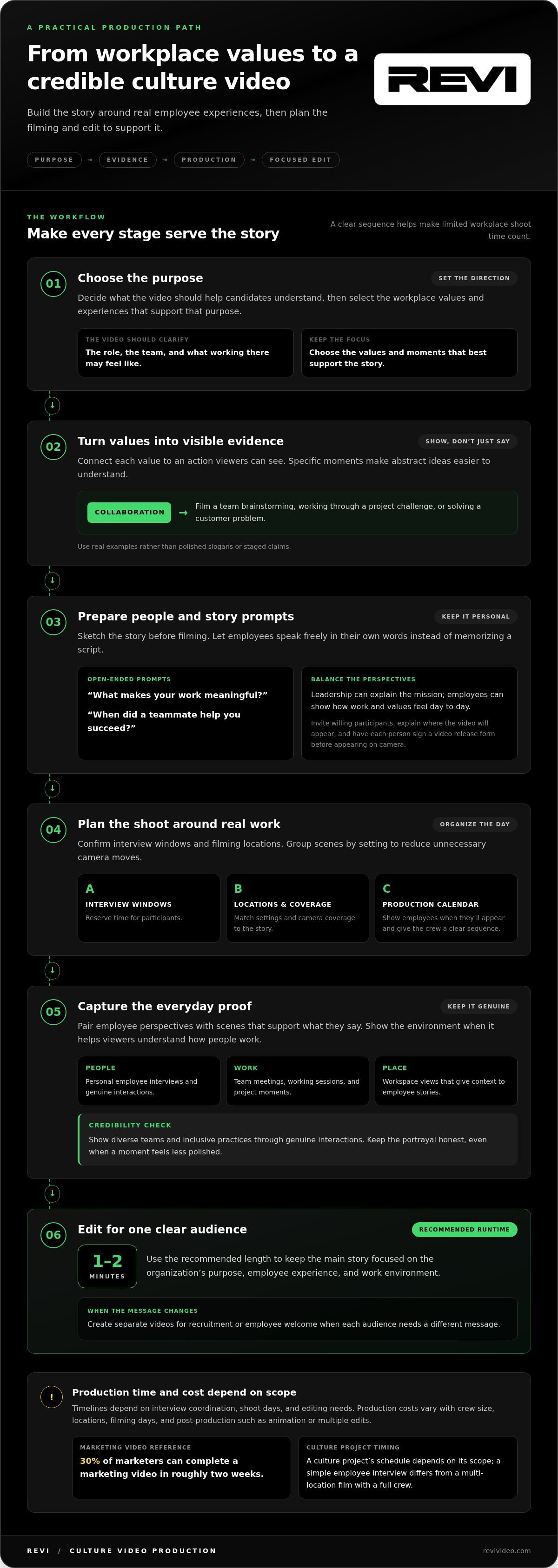
A strong culture video offers evidence, not slogans. Show employees describing real work, then pair their words with scenes that support the story. If collaboration matters, for example, film a team brainstorming or solving a project challenge. Specific moments help candidates picture the workplace.
Keep employee testimonials personal. Ask open-ended prompts such as “What makes your work meaningful?” or “When did a teammate help you succeed?” Let employees speak freely instead of memorizing scripts. Their own words reveal how people experience the organization, while specific stories make abstract values easier to understand. Leadership can explain the mission, balanced with employees’ day-to-day experiences.
Example, Supernus Pharmaceuticals: This company’s culture video combines employee interviews, team meetings, and casual interactions. The result brings together personal perspectives and everyday workplace scenes, rather than telling the story only through leadership. Apply the same approach by pairing a leader’s explanation of a value with an employee example of that value in action.
Choose scenes that reflect the culture you want to show. A collaborative workplace might feature a working session; a close-knit team could share a lunch conversation. Include the physical environment when it helps viewers understand how employees work. Show diverse teams and inclusive practices through genuine interactions, not staged claims. Keep the portrayal honest, even when a moment feels less polished.
Before filming, invite employees who genuinely want to participate and get their consent to use their image. Have each participant sign a video release form before appearing on camera. Explain where the video will appear and what the filming involves. These steps help employees make an informed choice and keep production organized. A credible culture video earns attention by showing real experiences, not by asking viewers to take claims on faith.
Culture video content and production tips
Which Mesa video production companies make company culture videos? Look for a production team that can shape employee interviews, workplace footage, and values into one clear narrative. A strong partner plans settings and camera coverage around the story, rather than filming attractive scenes without a purpose.
How long should a company culture video be? Aim for 1-2 minutes, a recommended length for keeping the main story focused. Use that runtime to show the organization’s purpose, employee experience, and work environment. Create separate videos for recruitment or employee welcome when each audience needs a different message.
Start with a simple production brief. Choose the values the video should demonstrate, then connect each value to an action. For example, show a team solving a customer problem to illustrate collaboration. Sketch out the story before filming, since workplace shoot time is often limited. Keep scripts free of internal jargon that could confuse job seekers.
Build the schedule around real work. Reserve interview windows, confirm filming locations, and group scenes by setting to reduce unnecessary camera moves. A production calendar helps employees know when they’ll appear and gives the crew a clear sequence to follow. In a University Partners culture video, wide workspace shots establish the setting, while close-ups bring individual stories forward.
Production timelines depend on interview coordination, shoot days, and editing needs. Thirty percent of marketers can complete a marketing video in roughly two weeks, but a culture project’s schedule depends on its scope. Production costs also vary with crew size, locations, filming days, and post-production such as animation or multiple edits. A simple employee interview requires a different setup than a multi-location film with a full crew. For a polished, story-led result, explore professional culture video production.
Examples of company culture videos
Which Mesa, Arizona companies have company culture videos? The examples here feature Apple, Netflix, Zappos, and Ellevation Education. Their storytelling approaches offer ideas Mesa employers can adapt to their own mission, team, and workplace.
Apple: Put employees in the frame
Situation: A recruitment video needs to show both the work and the people behind it. Action: Apple pairs footage of its machines with workplace culture, while another culture video features a montage of 68 employees. Result: Candidates see people and work together, instead of hearing only broad claims. To adapt the approach, connect each visual to a real value or employee experience.
Netflix: Make the message concise
Situation: Viewers need a quick introduction to the company’s approach. Action: Netflix’s “Taking Risks, Making Bets” culture video runs approximately 2 minutes and frames its story around a clear idea. Result: The focused runtime keeps the narrative centered on a specific theme. A Mesa organization can use the same principle by choosing one mission-driven message for its main culture video.
Zappos: Explain why culture matters
Situation: Candidates want to understand how a company thinks about its workplace. Action: Zappos’ “Why Company Culture Matters” video runs approximately 2 to 3 minutes. Result: Its direct subject gives viewers a clear lens for interpreting the company’s culture. Use a plain-language title and examples that show how stated values shape everyday work.
Ellevation Education: Let the story move quickly
Situation: A culture video must share a concise impression without becoming a full company overview. Action: Ellevation Education’s video runs 65 seconds. Result: Its short format makes a brief, engaging introduction possible. For a Mesa team, this approach can suit a social post or hiring page, while a longer video can add testimonials and more detail. Keep every scene honest and tied to the employee experience.
Benefits of culture and recruitment videos
A culture video shows what working at an organization feels like. A recruitment video focuses more directly on a role, hiring needs, and reasons to apply. They can share footage, but each needs its own script and purpose. For example, use a culture story to explain values, then a role-specific video to outline a team’s work.
That distinction helps candidates find relevant information. The American Psychological Association’s Work in America survey found that 94% of respondents said workplace belonging was important to them. Employee interviews and honest stories can show how people experience belonging at work. They also give viewers details to consider beyond polished claims.
Measure impact against the video’s goal. For recruitment, track views on job pages, completed applications, and candidate feedback. For broader culture content, review watch time, shares, and visits to hiring pages. Compare results across the same channels and time periods, then use viewer drop-off points to refine the format or opening.
Humor can make a recruitment video more memorable, but it should fit the organization’s real tone. Twitter’s recruitment video uses 1980s-style graphics and humor in an HR interview. The situation is a formal hiring conversation; the action is to add playful visuals and jokes; the result is a distinctive format that still centers recruitment. Keep the script respectful and make sure the humor doesn’t obscure the role or workplace.
Choose a format that fits the message. A talking-head interview can explain responsibilities clearly, while employee stories can reveal how teams collaborate. A short culture video can introduce the organization; a separate recruitment video can answer practical questions about a specific opening. Ask employees to review both for accuracy before publishing.
Turn your hiring goal into a clear video plan with recruitment video production. Match each story, interview, and channel to the candidates you want to reach.
REVI: Ad buying
REVI can help turn your culture video into a clear part of your hiring strategy. Use Video Production to shape the story and create content that reflects your workplace, then consider Ad buying when you want to promote it to relevant audiences. A focused campaign can connect the video with recruitment messaging, while Website Development can support a hiring page where candidates explore roles and team information. Brand Building helps keep the organization’s message cohesive across those touchpoints. Turn to REVI when you’re ready to move from planning a culture video to producing and promoting it. The right mix depends on your goals, audience, and existing content. Contact REVI to discuss your next step.
Turn Your Culture Story Into Your Next Hiring Asset
Give the video a role beyond launch day. Add it to your careers page, share tailored cuts across social channels, and use candidate feedback to shape future stories. A company culture video in Mesa can become a lasting part of how applicants discover and understand your organization.
REVI supports the production, promotion, and destination for that content through Video Production, Ad Buying & Management, and Web. Align these services around one clear hiring goal, whether you want to introduce your workplace or bring a specific opportunity to life. REVI’s end-to-end production and data-backed advertising can create a connected path from first view to deeper exploration, while keeping the human story at its center.
Start planning your culture video with REVI, and take the next step toward showing candidates what makes your workplace yours.
Frequently Asked Questions
What are examples of effective company culture videos?
Effective examples make the organization’s purpose easy to grasp through a distinct storytelling format. Google’s “What’s it like to work at Google?” video runs approximately 3 minutes and introduces its workplace through an employee-focused perspective. Wider Thinking uses abstract animation and voiceover to explain core values. These approaches show how Mesa employers can choose live-action interviews or animation to match their message and audience.
How do Mesa companies create a company culture video?
A company culture video in Mesa starts with a hiring goal, a target audience, and one clear message. Teams in Mesa, Phoenix, Scottsdale, Gilbert, Chandler, Paradise Valley, and Tempe can outline key scenes, choose employee participants, and schedule filming around workplace activity. Prepare interview prompts and locations in advance, then review the edit for accuracy, clarity, and alignment with the roles candidates are considering.
What should a company culture video include?
Include the organization’s purpose, employee benefits, and a concrete example of how the work makes a difference. For a healthcare employer, that might mean explaining how a team supports patients, alongside employee perspectives on development opportunities. Add only the details candidates need to understand the workplace. A focused script, clear titles, and a direct next step help viewers connect the story to open roles.
How much does it cost to produce a company culture video in Mesa, AZ?
Project pricing depends on the production scope. Key cost factors include crew size, filming days, locations, interview count, editing scope, and deliverables such as shorter campaign cuts. A single interview in one setting calls for a different production plan than a multi-location story with several employees. Define the intended use and scope to shape a relevant project estimate.
What are best practices for filming employees and company culture?
Invite employees who want to participate, explain how the footage will be used, and obtain consent before filming. Have each participant sign a video release form. Use open prompts rather than scripted answers so employees can describe their experience naturally. Capture ordinary work interactions as well as interviews, and avoid staging scenes that could misrepresent the workplace. Review the final edit for accuracy before sharing it with candidates.
Which Mesa video production companies make company culture videos?
Look for a production team that can shape employee interviews, workplace footage, and company values into one clear narrative. It should plan settings and camera coverage around the story.