

A long agency contract can turn a changing marketing plan into a fixed obligation. For more flexibility, start with a 3-6-month commitment and 30-day rolling renewals. Avoiding long-term contracts with marketing agencies is less about chasing the shortest deal and more about matching the term to the work and your room to adapt.
Looking beyond the monthly fee makes sense. Contract length can affect how quickly you can change tactics, assess results, or end a relationship that no longer fits. At the same time, some marketing work takes time to show meaningful progress, so a shorter term is not automatically the better choice.
This guide explains the trade-offs between long and short agreements, how contract length can shape agency incentives, and which terms deserve close attention before you sign. It also offers practical ways to build in review points, clearer exit options, and flexibility without undermining the work your marketing needs to grow.
Key Takeaways
- Match the contract term to the work: a 3-6-month initial commitment with 30-day rolling renewals can create room to assess progress and adjust priorities.
- Set clear review points and performance measures so you can spot when tactics need to change, rather than letting the contract dictate the strategy.
- Before signing, examine termination notice, renewal windows, exit fees, and ownership of your website and marketing assets.
- Compare short-term flexibility with the planning and continuity a longer agreement may provide, then choose the shortest term that still supports the work.
1. Flexibility to change marketing tactics and goals
A signed contract can limit how quickly a client changes direction. If market conditions shift, fixed tactics may continue even after priorities change. Schools are generally advised to avoid agency commitments longer than six months at a time. For any business, compare the contract term with how often your goals, audience, or marketing channels might change. The longer the commitment, the more important clear review points become.
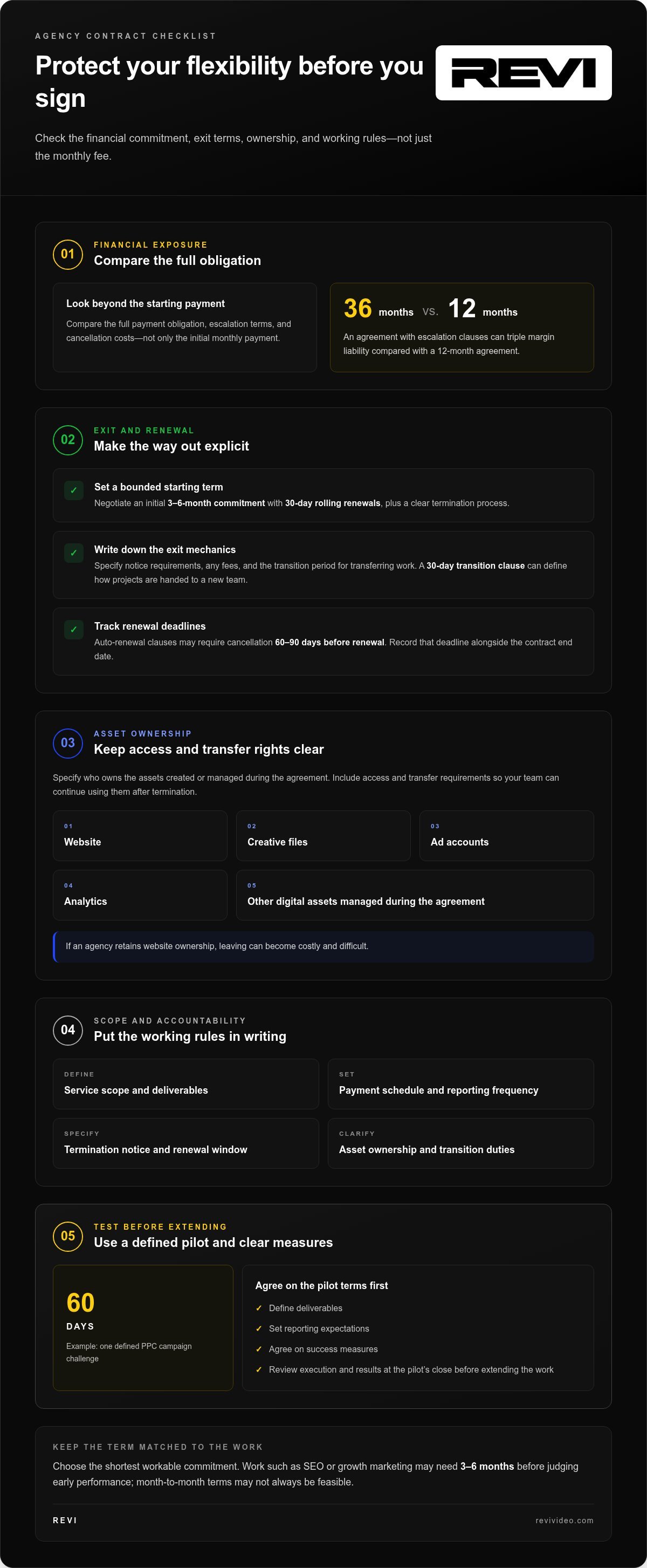
Digital marketing also needs room to test. In one example, an agency learned after two months that Instagram might not suit the client. A flexible agreement can let both sides redirect effort rather than continue an ineffective tactic for the rest of the year. A 60-90 day pilot gives the client a defined period to assess a high-priority challenge before extending the relationship.
Build flexibility into the terms, not just the strategy. Set a monthly review to compare progress against current goals, then document how the client and agency can revise channels, deliverables, or spending. Month-to-month terms may not always be feasible, so choose the shortest workable commitment. If the work needs time to produce meaningful results, such as SEO or growth marketing, allow 3-6 months before judging early performance. Keep budget available for a change in direction instead of locking every dollar into retainers.
2. Agency incentives under short- and long-term contracts
A contract defines what an agency must deliver and how quickly the client can change course. A longer commitment can help an agency plan staffing and coordinate work over time. But signing a lengthy agreement before testing the relationship may make it harder to respond when circumstances change. Weigh continuity against the cost of staying in a partnership that no longer fits.
Consider a school that signs a two-year commitment after working with an agency for three months. That early experience may not show how the team handles changing priorities, missed expectations, or difficult feedback. A shorter initial term creates a clear decision point. Both sides can review results and working practices before extending the relationship, rather than relying on early impressions for years.
Long contracts can also shift the agency’s focus. An agency hired for a 12-month brand-awareness campaign still needs clear outcome measures and regular reviews. Without them, contractual deadlines can become the main target, even when the work needs adjustment. If the relationship deteriorates, the client may remain committed for eight months, paying for work that no longer supports current goals. That obligation can weaken the urgency to improve communication or quality.
Staffing deserves attention, too. Some agencies replace experienced account managers with junior staff after a few months. The contract should identify who leads the work, how staffing changes are handled, and how the client can raise concerns. A defined review process keeps accountability visible. Schedule recurring performance discussions, for example, and document agreed actions, owners, and deadlines. Then assess whether the agency follows through, not just whether it completes scheduled tasks.
Long-term agreements can suit work that requires sustained coordination, especially when both parties understand the scope and responsibilities. Shorter terms can preserve flexibility while trust develops. Before signing, compare the agency’s commitment to your goals with your ability to act if service quality, staffing, or business priorities change.
3. What steps protect you from long agency contract pitfalls?
Protect your financial flexibility before signing. Longer agreements can create substantial financial exposure and make it harder to exit. A 36-month agreement with escalation clauses can triple margin liability compared with a 12-month agreement. Compare the full payment obligation, escalation terms, and cancellation costs, not only the initial monthly payment.
Negotiate the terms that control your exit and ownership. Ask for an initial 3-6-month commitment with 30-day rolling renewals, plus a clear termination process. Specify notice requirements, any fees, and a transition period for transferring work. A 30-day transition clause can define how the agency hands projects to a new team.
Check asset ownership before the relationship begins. Specify who owns the website, creative files, ad accounts, analytics, and other digital assets created or managed during the agreement. If an agency retains ownership of the website, leaving can become costly and difficult. Include access and transfer requirements so your team can continue using its assets after termination.
What contract terms should clients negotiate with a marketing agency? Set the service scope, deliverables, payment schedule, reporting frequency, termination notice, renewal window, asset ownership, and transition duties in writing. Auto-renewal clauses can require cancellation 60-90 days before renewal, so record that deadline alongside the contract end date.
How can clients avoid being locked into long-term contracts with marketing agencies? Start with a limited commitment, use rolling renewals, and keep a written exit clause. Without an exit clause, businesses may face 6-12 months of payments after leaving. Review renewal dates early, since missed cancellation windows can extend the financial obligation.
4. Differences between long- and short-term agency contracts
A long agency contract is typically a fixed-term service agreement lasting 12 months or longer. It can support sustained planning, but it also commits the business to paying through the stated term. A short agreement, often 1-3 months, generally offers lower cost exposure and an easier exit. The core difference is control: short terms preserve the ability to reassess, while long terms create continuity.
Continuity can matter when a project requires substantial resources or coordinated work over time. A larger company may invest in a long-term partnership to align planning, creative production, and execution. In return, the agreement should define deliverables, reporting, and accountability. Transparency makes expectations clear: both sides can see what work is due and how progress will be assessed.
Short terms can make an agency relationship easier to adjust, but frequent renewals may complicate planning. An agency may hesitate to reserve capacity or develop a strategy if the work could end quickly. The client may also spend time revisiting the scope instead of improving campaigns. Put renewal dates, responsibilities, and handoff expectations in writing to reduce friction between contract periods.
What risks come with short-term or no-commitment agency agreements? The agency may have less incentive to reserve resources for work that could end at any time, while the client may lose continuity between campaign cycles. A defined term with clear milestones can balance accountability and flexibility.
Choose based on the work, not a blanket preference for short or long contracts. For a contained project, a short term can limit commitment; for coordinated ongoing work, a longer term may support planning. Compare exit options, ownership, renewal terms, and performance reviews before signing. To turn marketing priorities into a practical campaign plan, explore a focused marketing strategy.
REVI: Ad buying
REVI helps businesses align ad buying with clear marketing priorities. If you’ve defined your goals and want focused support turning them into campaigns, this is a natural next step. Set the campaign scope, deliverables, reporting expectations, and review process before work begins so you can assess progress against your objectives.
Keep the plan connected to the wider brand. REVI also offers Brand Building, Video Production, and Website Development to support a cohesive presence across campaigns and customer touchpoints. Choose the work that fits your current needs, and clarify responsibilities from the start.
Ready to discuss your marketing goals? Contact REVI to explore ad buying for your business.
Build a Marketing Partnership That Can Move With You
Your marketing needs will evolve as your audience, offers, and business priorities change. Treat the agency relationship as part of your operating strategy, not a decision you make once and forget. Stay in control of the direction: revisit what the business needs, clarify who makes decisions, and make sure the working relationship supports your next priority.
A thoughtful approach to avoiding long-term contracts with marketing agencies protects more than your budget. It keeps your options open as you learn what resonates with customers and where your next growth opportunity lies. The strongest partnership keeps the scope, communication, and work aligned with your goals.
REVI offers ad buying, Video Production, and Website Development to support businesses shaping their marketing presence. If you’re ready to discuss what fits your priorities, contact REVI to discuss your options. Take the next step with clarity and keep your marketing moving forward.
Frequently Asked Questions
What steps protect you from long agency contract pitfalls?
A practical approach to avoiding long-term contracts with marketing agencies starts with a written scope, named deliverables, an approval owner, and a clear process for changing priorities. For a Phoenix-area business serving Scottsdale, Gilbert, Mesa, Chandler, Paradise Valley, or Tempe, specify how shifts in local audiences or campaign goals trigger a scope review. Keep decisions in a shared workspace so expectations stay clear if team members change.
What are alternatives to long-term marketing agency contracts?
For businesses focused on avoiding long-term contracts with marketing agencies, project-based agreements can cover defined work, such as a campaign build or website redesign. Use retainers only for genuinely recurring tasks, or start with a pilot to assess communication and execution. A performance-linked component can tie payment to an agreed outcome. These options let Phoenix businesses separate strategic planning from ongoing management.
How do month-to-month marketing agency agreements work?
A month-to-month agreement renews for another month unless either party gives notice under its terms. Spell out what the monthly payment covers, when work begins and ends, how incomplete deliverables are handled, and whether account access continues during a transition. Review the partnership every 30 days against consistent priorities and reporting, then document whether you’ll renew, revise the scope, or end the relationship.
What is a reasonable notice period for ending a marketing agency contract?
For month-to-month work, a 30-day notice period is a practical term to negotiate; some agreements instead propose 90 days, allowing more transition time but extending the commitment. The right period depends on campaign handoff needs, unfinished deliverables, and access transfers. Put the notice method and effective end date in writing, then calendar the deadline as soon as the agreement is signed.
How do early termination fees and auto-renewal clauses work in agency contracts?
An early termination fee defines what the business owes if it exits before the agreed end date. Clarify the trigger and calculation instead of accepting a vague penalty. An auto-renewal clause extends the agreement unless cancellation arrives within its notice window, which may fall 60-90 days before renewal. Add renewal dates to a shared calendar and assign someone to send written notice.
What should a marketing agency contract say about ownership of accounts, data, and creative assets?
Name who owns each deliverable and who controls the accounts used to create or distribute it. Specify administrator access to ad platforms, website hosting, analytics, source creative files, and exported campaign data, along with the handoff format and timing. For example, require access credentials and editable files at project close, not only finished assets. This helps a Phoenix business continue campaigns without rebuilding its digital foundation.