

A crowded calendar doesn’t guarantee a crowded event. Marketing for events at Phoenix Convention Center starts with a clear audience, a compelling reason to attend, and coordinated promotion that builds awareness before the doors open. The venue provides a setting for events, and a focused message can help your event stand out.
Event promotion takes more than posting an announcement and hoping the right people see it. The opportunity is to connect each message with people most likely to attend, then keep that message consistent as interest grows. This guide explains how to shape your event’s positioning, choose promotion channels, and turn attention into registrations and brand awareness. It also covers how Phoenix’s convention setting can inform your approach and how to build a campaign around your event goals, from launch through follow-up.
Key Takeaways
- Build promotion around a specific audience and a clear reason to attend, then keep the message consistent across campaign channels.
- Use the venue’s event scale and format to shape creative, timing, and audience outreach rather than relying on a one-size-fits-all campaign.
- Plan promotion, signage, banners, and sponsorships together; the event setup and selected placements influence the overall cost.
- Coordinate local media, tourism, and business partners to extend event visibility, and use REVI’s ad buying when you need support planning and placing campaigns.
Event promotion and client attraction
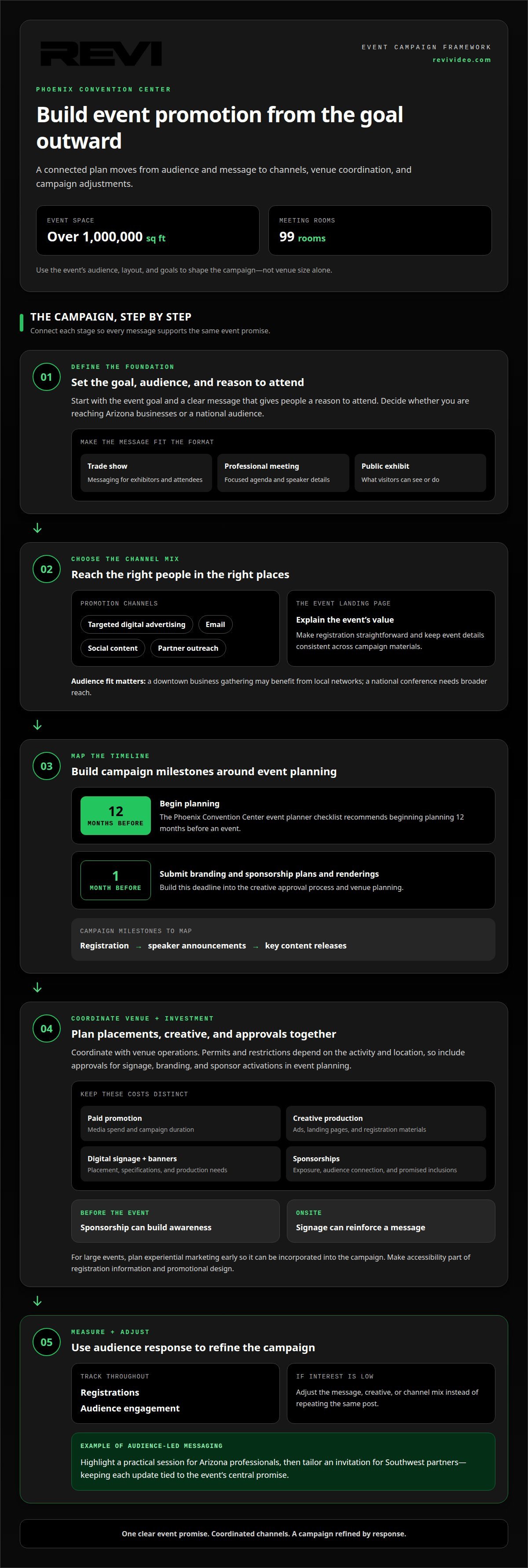
At a venue with over 1,000,000 square feet of event space, promotion needs a clear audience and message. Plan around the event’s format, whether it targets Arizona businesses or a national audience.
Event Marketing Channels
For marketing for events at Phoenix Convention Center, combine targeted digital advertising, email, social content, and partner outreach. Use a landing page that explains the event’s value and makes registration straightforward. Match each channel to your audience: a downtown business gathering may benefit from local networks, while a national conference needs broader reach. Keep details consistent across campaign materials and coordinate with venue operations. For large events, plan experiential marketing early so it can be incorporated into the campaign.
Promotion Costs and Sponsorships
Promotion costs depend on channel mix, placements, campaign duration, creative production, and sponsorship inclusions. Track digital signage and banners separately from paid media because their placement and production needs differ. Compare each option by audience fit, visibility, and role in the attendee journey. Sponsorship can build awareness before the event, while signage can reinforce a message onsite. Set priorities first, then allocate budget to formats that support your objectives.
Marketing Plan Steps and Timeline
Start with the event goal, target audience, and a message that gives people a reason to attend. The Phoenix Convention Center event planner checklist recommends beginning planning 12 months before an event. Map campaign milestones against registration, speaker announcements, and key content releases. The checklist calls for submitting branding and sponsorship plans and renderings one month before an event. Build those deadlines into the creative approval process to keep campaign materials aligned with venue planning.
Track registrations and audience engagement throughout the campaign. If interest is low, adjust the message, creative, or channel mix instead of repeating the same post. For example, highlight a practical session for Arizona professionals, then tailor an invitation for Southwest partners. Keep each update tied to the event’s central promise.
Phoenix Convention Center events
Phoenix Convention Center suits events that need flexible rooms, exhibit space, or a downtown Phoenix setting. Its 99 meeting rooms support varied formats, from focused meetings to trade shows and larger exhibits.
Compared with other Arizona event venues, the center’s scale and range of event spaces make it a strong fit for programs combining different formats. Choose based on your audience, layout, and event goals, not venue size alone.
Permits and restrictions depend on the activity and location. Include venue approvals for signage, branding, and sponsor activations in event planning, and make accessibility part of both registration information and promotional design.
For Phoenix Convention Center calendar and Visit Phoenix listings, prepare the event name, dates, venue, description, audience, and registration details. Submit each listing separately, and keep its published information consistent with the event website and campaign creative.
The Phoenix Convention Center welcomes more than a million visitors each year and hosts hundreds of events. These figures describe overall venue activity, not the likely attendance or demographics of a particular event. Use your registration data and audience research to guide targeting.
Start with the event format. A trade show needs clear messaging for exhibitors and attendees; a professional meeting needs a focused agenda and speaker details. For a public exhibit, lead with what visitors can see or do. Then tailor landing pages, social posts, and emails to each audience instead of sending everyone the same invitation.
Downtown Phoenix provides useful destination context for event materials. Connect practical details with the surrounding experience, such as the venue’s location and what attendees can expect from the program. Keep claims specific and relevant. A concise event page, consistent dates, and accessible creative help people understand the offer before registering.
The Phoenix Convention Center hosted Super Bowl LVII in 2023, while Phoenix hosted the NCAA Men’s Basketball Final Four in 2024. Phoenix is scheduled to host the NCAA Women’s Basketball Final Four in 2026.
Phoenix Convention Center Promotion & Sponsorship Costs
Build a Phoenix Convention Center budget by separating campaign spending from venue-related placements. Track paid promotion, creative production, digital signage, banners, and sponsorships as distinct line items. This makes it easier to compare each investment with its purpose, such as driving registrations or increasing onsite visibility.
For digital promotion, identify the audience, channels, campaign duration, and creative requirements first. A campaign for Phoenix-area attendees may need different targeting and content from one seeking national reach. Separate media spend from the work required to produce ads, landing pages, and registration materials. Then assess performance against the campaign goal, not impressions alone.
For digital signage and banners, match each message to the attendee journey. A registration reminder serves a different purpose from directional messaging or sponsor recognition. List each placement, its intended audience, creative specifications, and production needs before comparing options. An exhibitor-focused message, for example, should emphasize trade show relevance, while a sponsor banner should make the partnership easy to recognize.
Evaluate sponsorships separately. Compare the exposure and audience connection each opportunity offers with your event objectives. A sponsor seeking brand awareness may value visible recognition; one focused on qualified leads may prioritize meaningful audience engagement. Record promised inclusions, creative requirements, and delivery responsibilities together so you can compare packages consistently.
Promotion pricing varies by campaign. Key cost factors include channel mix, duration, creative scope, placement, production requirements, and sponsorship inclusions. Keep venue placements separate from external advertising because each plays a different role in reaching attendees.
Before committing funds, rank each item by its contribution to registration, onsite navigation, or sponsor value. Assign an owner and approval deadline to every budget line. At Phoenix Convention Center, align branding and sponsorship plans with event milestones, then review the full budget before promotion begins.
What local Phoenix media, tourism, and business partners can help promote events at the convention center?
Local partners can extend an event’s reach beyond its own channels. Choose partners based on the audiences they already serve, then provide a clear message and an easy next step. A downtown Phoenix business event, for example, can focus on local professionals, while a public exhibit can address residents and visitors.
Pitch Phoenix media with a specific story angle rather than a generic event announcement. Share the event’s purpose, notable speakers or exhibitors, audience value, and registration details in a concise media brief. A trade show might spotlight an industry trend; a community event could give families a practical reason to attend. Include approved images and interview contacts.
Tourism partners can help position an event as part of a Phoenix destination experience. Give Visit Phoenix and relevant hospitality contacts accurate dates, audience information, and a concise description for their channels. Make the attendee benefit clear, such as combining a professional meeting with time to explore downtown. Keep venue, registration, and travel details aligned across listings.
Business partners can activate their own networks. Invite Arizona trade associations, member organizations, exhibitors, and sponsors to share messages tailored to their audiences. Provide each group with a ready-to-use email paragraph and social post, plus a trackable registration link when available. An association can emphasize professional development, while an exhibitor can highlight demonstrations.
Coordinate outreach with a simple partner plan that names each contact, audience, message, asset, and publication date. Track referrals and registrations by source. If a media mention builds awareness but brings few sign-ups, sharpen the call to action; if a partner drives registrations, prioritize that audience in follow-up content. This makes local relationships a source of measurable campaign insight.
Need a sharper campaign message for Phoenix partners? Build event-ready promotional content that gives media, tourism, and business contacts a clear reason to share.
REVI: Ad buying
REVI helps event organizers turn promotion goals into focused ad buying, supported by video production, website development, and brand building when they fit the campaign. Bring in ad buying when you need a strategic plan to reach prospective attendees through relevant channels, rather than spreading spend without a defined audience or message.
Start with the event’s audience, strongest reason to attend, and registration destination. Align campaign creative and landing-page messaging so every ad leads to a consistent next step. For a Phoenix Convention Center conference, that could mean emphasizing the program’s value to prospective attendees; a public exhibit could spotlight what visitors will experience.
When you’re ready to connect your event message with a coordinated promotion plan, contact REVI to discuss your campaign.
Turn Your Event Plan Into Momentum
Turn your campaign idea into a clear attendee journey. Decide what you want people to do first, then make every touchpoint support that action, from the first ad to the registration page. A focused approach to marketing for events at Phoenix Convention Center can keep your message consistent while giving each audience a relevant reason to engage.
When you’re ready to move from planning to execution, REVI can support your campaign with ad buying, video production, and website development. These services connect audience targeting and creative with a destination where prospective attendees can take action. Start with your event goal and the audience you most want to reach, then shape the campaign around them.
Contact REVI to discuss event marketing and take the next step toward a campaign built around your event. Give your Phoenix event a focused launch and keep its momentum growing.
Frequently Asked Questions
How can event organizers reach Phoenix Convention Center’s attendee and exhibitor audiences?
Give attendees and exhibitors separate messages, landing pages, and next steps. Attendees may need session details and registration prompts; exhibitors may be looking for floor-plan information, prospect opportunities, or ways to book product demonstrations. Use registration and inquiry data to tailor follow-up, then coordinate reminders for each audience with the event schedule. This helps people find the details that matter to their role.
How can organizers promote events near Phoenix Convention Center, including downtown attractions and hotels?
Connect the event invitation to practical downtown plans. Downtown Phoenix has more than 4,000 hotel rooms within walking distance of the convention center, and more than 150 restaurants nearby. Include venue directions and nearby options in attendee communications. For regional outreach, tailor messages for people in Phoenix, Scottsdale, Gilbert, Mesa, Chandler, Paradise Valley, and Tempe, emphasizing relevant sessions and planning details.
What are the venue’s attendance, visitor demographics, and event marketing statistics?
The center welcomes more than a million visitors and hosts hundreds of events each year. These venue-wide figures do not predict attendance or demographics for a specific event. Use registration data and audience research to guide targeting.