

A high Google Ads CPC in Phoenix doesn’t automatically mean a campaign is wasting money. A costly click can still pay off when it reaches the right prospect.
It’s easy to focus on the cost of each click, especially when competition drives bids up. But keyword intent, ad relevance, landing-page performance, and the value of a completed job all affect what you can afford to pay for a lead. Lower CPC alone isn’t the goal; stronger campaign efficiency is.
Here’s how competition across Phoenix industries affects click costs, why keyword choices influence lead quality, and how to weigh cost per lead against potential job value. You’ll also find practical ways to improve a high-cost campaign, from refining search terms to testing ad copy and landing pages. Use these factors to judge whether your spend reaches the right audience and supports profitable growth.
Key Takeaways
- Compare click costs by industry, then judge them against the value of the work a lead could bring in.
- Refine keywords around search intent to spend less on clicks that are unlikely to become qualified inquiries.
- Track cost per lead and conversion performance, not just clicks, to spot where a campaign needs attention.
- Use ad buying, landing-page improvements, and creative testing to build a more efficient path from search to lead.
Conversion and job-value strategies for high-CPC campaigns
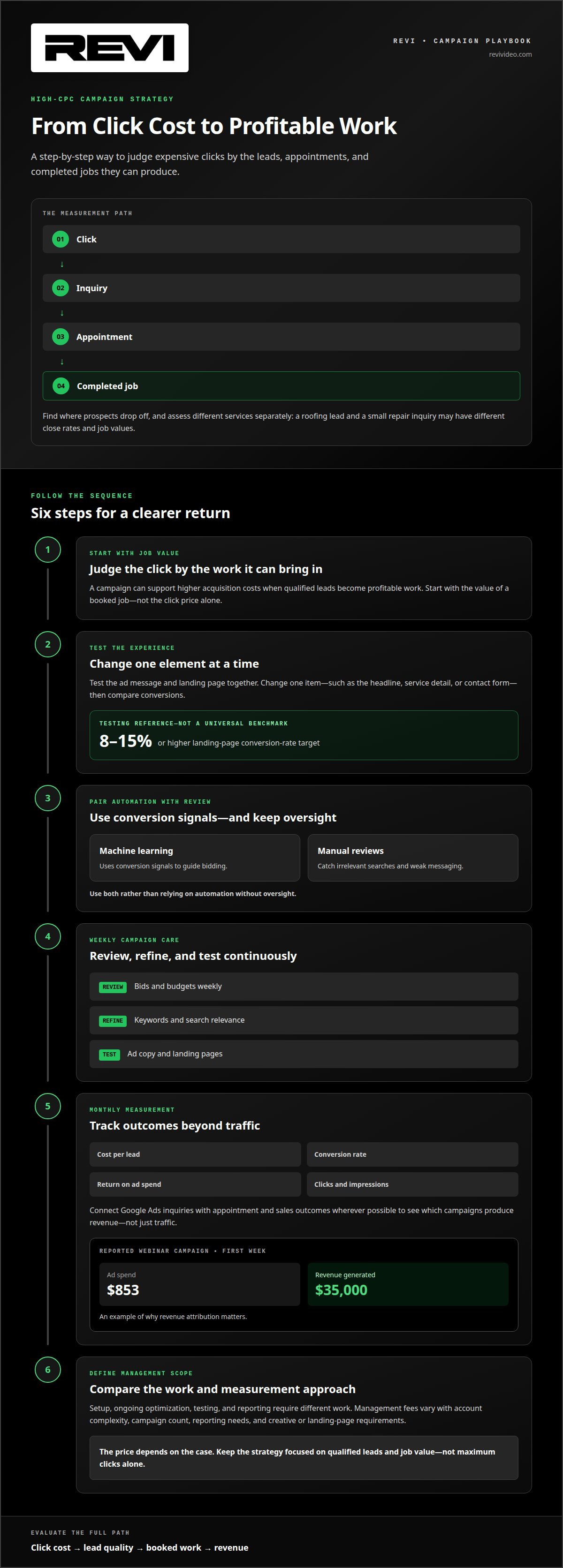
Start with the value of a booked job, not the cost of a click. A campaign can support higher acquisition costs when qualified leads become profitable work. Map the path from click to inquiry, appointment, and completed job, then identify where prospects drop off. A roofing lead and a small repair inquiry may have different close rates and job values, so assess them separately.
Test the landing page and ad message together. Change one element at a time, such as the headline, service detail, or contact form, then compare conversions. A landing-page conversion-rate target of 8-15% or higher can serve as a testing reference, not a universal benchmark. Machine learning can use conversion signals to guide bidding, while manual keyword and ad reviews catch irrelevant searches or weak messaging. Use both, rather than trusting automation without oversight.
Manage campaigns continuously. Review bids and budgets weekly, refine keywords, and run active ad-copy and landing-page tests. Monthly reporting should show cost per lead, conversion rate, and return on ad spend, alongside clicks and impressions. Connect Google Ads inquiries with appointment and sales outcomes wherever possible. That gives you a clearer view of which campaigns produce revenue, not just traffic. One reported webinar campaign spent $853 on ads and generated $35,000 in revenue during its first week, illustrating why revenue attribution matters.
Keep management scope clear: setup, ongoing optimization, testing, and reporting require different work. Ads-management fees vary with account complexity, campaign count, reporting needs, and creative or landing-page requirements. The price depends on the case and is given after a quote request, with those factors shaping the scope. Compare the planned work and measurement approach, not just the fee model. That keeps the strategy focused on qualified leads and job value, instead of maximum clicks alone.
Competitive Phoenix industries and per-click costs
Phoenix click costs vary by industry, keyword intent, and auction competition. Compare similar searches before deciding whether your ad spend is efficient.
Phoenix Click Costs
That figure is a starting benchmark, not a target for every account. Review each campaign’s search terms, traffic quality, and landing-page performance before adjusting bids.
Regional CPC Comparisons
Industry data averages help set expectations, but local market conditions matter most. Make comparisons useful by matching industry, keyword intent, campaign type, and time period. A broad national figure can hide the difference between local service searches and high-value legal queries. Treat comparisons as context, then use your own conversion and lead data to guide changes.
Competition also varies across Phoenix industries. Personal injury law, medical practices, and financial services face especially competitive auctions. Businesses in these categories should separate high-intent searches from broad informational terms. Otherwise, expensive clicks may bring traffic that isn’t ready to contact a provider. Review keyword and location settings to keep campaigns focused on relevant demand.
Industry figures show how sharply costs can differ. Those figures describe that dataset, not every Phoenix account. Compare them as category signals, then assess your own searches and conversion quality.
Use a straightforward review process: group campaigns by service, compare search intent, and identify terms that attract costly but unqualified traffic. Adjust bids and ad messaging to prioritize searches likely to produce relevant inquiries. Improve campaign focus rather than chasing low CPC at the expense of valuable leads.
Cost-per-lead benchmarks and optimization
Optimize for qualified leads, not simply cheaper clicks. Phoenix campaigns should target relevant service areas and accurately represent work that meets applicable local requirements; electrical and plumbing contractors need applicable permits and must comply with local bylaws. Ad relevance and landing-page experience influence Quality Score, while stronger relevance and click-through rates can help lower CPC.
Targeting and Bidding Refinement
Use location settings to focus spend on the Phoenix areas your business serves, then review search terms for irrelevant traffic. Separate campaigns by service and intent so bids reflect lead quality, not just click volume. Track calls and form submissions, then compare cost per lead across locations and services. Refine bids around searches that produce qualified inquiries, and exclude terms that repeatedly attract poor-fit prospects.
Account and Ad Optimization
Account optimization means checking campaign structure, keywords, ad messaging, and conversion tracking as one system. Test distinct ad messages against the same target audience, then use conversion data to guide adjustments. A roofing case study reported cost per lead falling from $285 to $67 after Google Ads and CRM automation were rebuilt. It also reported a 76% reduction in cost per lead and a 363% increase in monthly leads.
Quality Score and Landing Page Experience
Make each ad match its keyword and landing page closely. If someone searches for a specific service, the page should explain it clearly and make the next step easy to find. Higher click-through rates can lower CPC, while mismatched messages can waste clicks. Test ad and landing-page changes separately, then review conversion tracking to see which adjustments improve lead quality.
Set a lead-cost benchmark against job economics. One reported service generated leads below $50 with an average sale of $3,400, showing why lead cost needs context. Measure qualified inquiries and resulting sales, not form fills alone. That comparison helps set a practical target and identify campaigns worth refining.
Google Ads management fees depend on setup needs, account complexity, campaign scope, reporting, and ongoing optimization. The price depends on the case and is given after a quote request. Compare the proposed work and tracking approach, so setup and continuing account improvements support measurable digital marketing outcomes.
Keyword research and competitor analysis
Phoenix keyword research starts with the exact services people seek, not broad traffic volume. Google search ads use text ads and targeted keywords to reach people searching for specific services. Separate urgent terms, such as “emergency plumbing,” from research-focused searches, such as “how plumbing repairs work.” This gives each campaign a clearer target and helps assess whether advertising can attract relevant inquiries.
Local context matters. Phoenix has a population of 1.6 million residents and an estimated density of approximately 25 contractors per 10,000 residents. Those figures point to a substantial local market with competing providers. Map the areas you serve, then compare search results for each service and location. Note which businesses appear, what services their ads emphasize, and whether their landing pages match the searches.
Build a keyword list around service, intent, and geography. For example, distinguish “Phoenix roof repair” from “roofing materials”: the first signals a service need, while the second may indicate research. Group closely related searches into focused campaigns and write ad copy that reflects the specific service. Review search terms regularly, add irrelevant queries as negative keywords, and retain terms that generate qualified inquiries.
Competitor analysis should inform your structure, not encourage imitation. Compare the promises and service details visible in Phoenix search ads, then decide what your own ad can state clearly and accurately. If several ads target the same broad phrase, test more specific service or location wording. Track each keyword’s clicks and lead outcomes so decisions reflect lead quality, not impressions alone.
Keep the process practical: gather search terms, group them by service intent, review Phoenix results, and measure outcomes. Revisit the list as demand and competitor messaging shift. This makes keyword research an active part of campaign improvement, focusing advertising on relevant searches and protecting your investment from avoidable, low-intent clicks.
REVI: Ad buying
REVI helps businesses turn campaign data into sharper ad-buying decisions. If clicks cost more but qualified leads aren’t keeping pace, a focused campaign strategy can reveal where targeting, messaging, or the landing experience needs refinement.
Bring keyword intent, lead quality, and job value into the same review. REVI’s ad buying connects those signals to a clearer plan for campaign structure and ongoing optimization. When ads need stronger creative or the destination needs work, Video Production and Website Development can support those parts of the customer journey.
Use this approach when your campaigns need a more connected strategy, not just more clicks. Contact REVI to discuss your advertising goals and next steps.
Make Your Next Campaign Move With Purpose
A high Google Ads CPC in Phoenix is a reason to examine the full customer journey, not just the auction. Define what a valuable inquiry looks like for your business, then align campaign choices with that outcome. This shifts the goal from buying more attention to making each marketing decision more accountable.
Bring the people responsible for advertising, creative, and your website into the same conversation. REVI offers ad buying, Video Production, and Website Development to support a more connected path from search impression to inquiry. A focused review can help identify which part of that path deserves attention first.
Set a clear priority for your next campaign discussion: improve lead quality, sharpen the message, or create a stronger destination for potential customers. Then choose the next step based on that priority, not clicks alone.
Contact REVI about your Phoenix campaign and move forward with a clearer plan. Your next improvement starts with one focused decision.
Frequently Asked Questions
What is the average Google Ads CPC in Phoenix, Arizona by industry?
There’s no single Phoenix average that represents every industry and keyword. The 99 Calls dataset reports a 2026 year-to-date average of $18.92 per click across industries. Use these figures as category context, then compare your own campaign’s search terms and lead quality.
Which industries have the highest Google Ads CPC in Phoenix?
Personal injury law, medical practices, and financial services are among Phoenix’s most competitive advertising categories. Specific, urgent searches can attract intense bidding because they signal immediate need or a valuable potential customer. Compare the intent behind each keyword, not just its industry label. A broad informational search and a local service request can face different auction pressure, even within the same market.
What factors drive high Google Ads CPC in Phoenix, including competition and seasonality?
Click costs respond to how many advertisers enter an auction, a search’s commercial intent, and how closely an ad matches the query. Local demand can also shift over time, changing how many businesses compete for relevant searches. Review performance across comparable periods and search terms. If costs rise, distinguish changes in demand from changes in targeting, bids, or ad relevance before adjusting strategy.
What are typical Phoenix CPC ranges for legal, insurance, home services, and healthcare keywords?
Insurance and healthcare costs depend on the specific service, search intent, and auction. Compare closely matched keywords rather than applying one category-wide estimate to every campaign.
How can advertisers find Google Ads CPC estimates for Phoenix keywords?
Use Google Ads Keyword Planner to explore estimates for specific searches, set the location to Phoenix, and review closely related terms. Compare service phrases with local modifiers, such as a service plus a neighborhood or city name. Treat forecasts as planning inputs, not promises of actual click costs. Once campaigns run, compare estimates with search-term reports and real lead outcomes to refine your projections.
How can businesses lower Google Ads CPC in Phoenix without losing conversions?
Protect conversions by changing one campaign element at a time. Review search terms, exclude irrelevant queries, and test ad wording that closely matches the service and landing page. Track qualified leads alongside click-through and conversion rates; a higher click-through rate can help lower CPC. Avoid broad bid cuts until you’ve checked which keywords and locations generate valuable inquiries, then shift spend toward stronger performers.